Five hundred employees. One auditorium—or three time zones on a single call. The CEO takes the stage. The slides load. And within ten minutes, half the room has mentally checked out.
Knowing how to engage a large audience during a town hall is one of the most persistent challenges facing corporate communicators today. These are the moments when strategy becomes culture, when leadership either builds trust or loses it. For more than 17 years, ImageThink has helped Fortune 50 companies, health care organizations, technology firms, educators, and nonprofits transform their highest-stakes gatherings through visual thinking—visualizing the big ideas of world leaders and thinkers on stages across 15 countries. What we’ve learned: when people can see ideas unfold in real time, they don’t just listen. They engage.
Why Engaging a Large Audience Is Challenging
Scale dissolves accountability. In a room of hundreds, passive listening becomes the default—and one-directional formats like slide decks position the audience as receivers, not participants. Hybrid and virtual formats compound the problem, leaving remote attendees feeling like observers rather than contributors. The result is meetings that feel like missed opportunities: leaders deliver a message, employees nod along, and real alignment never takes hold.
The challenge of how to engage a large audience isn’t a people problem. It’s a format problem. And the most effective solution isn’t a livelier presenter or a snappier slide deck—it’s making the conversation visible.
Why Visual Communication Works for Large Audiences
Most people process and retain information far more effectively when it’s presented visually. When you combine visual and verbal communication, retention rates increase dramatically—which is why visual communication for events has become a cornerstone of high-impact organizational meetings. Visual storytelling for presentations does something slides alone cannot: it makes thinking tangible. When an idea is captured and illustrated in real time, it becomes shared property. Everyone can see it, react to it, and connect to it.
That shared reference point is the foundation of genuine alignment—and it’s the core reason visual engagement strategies consistently outperform traditional town hall formats.
How to Engage a Large Audience During Town Halls
Effective audience engagement techniques start before the event begins and extend long after it ends. Open with a visual hook—a large-format mural in progress signals immediately that this is not a typical meeting. Curiosity, not compliance, becomes the entry point. Build in interactive presentation methods throughout: visual prompts, digital polls that feed into a live display, or structured moments where groups sketch their reaction to a leadership message. These touchpoints interrupt passive listening and create moments of real cognitive engagement.
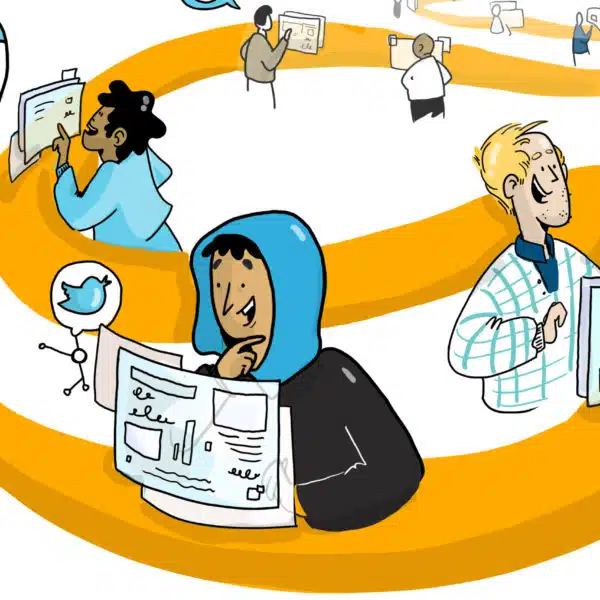
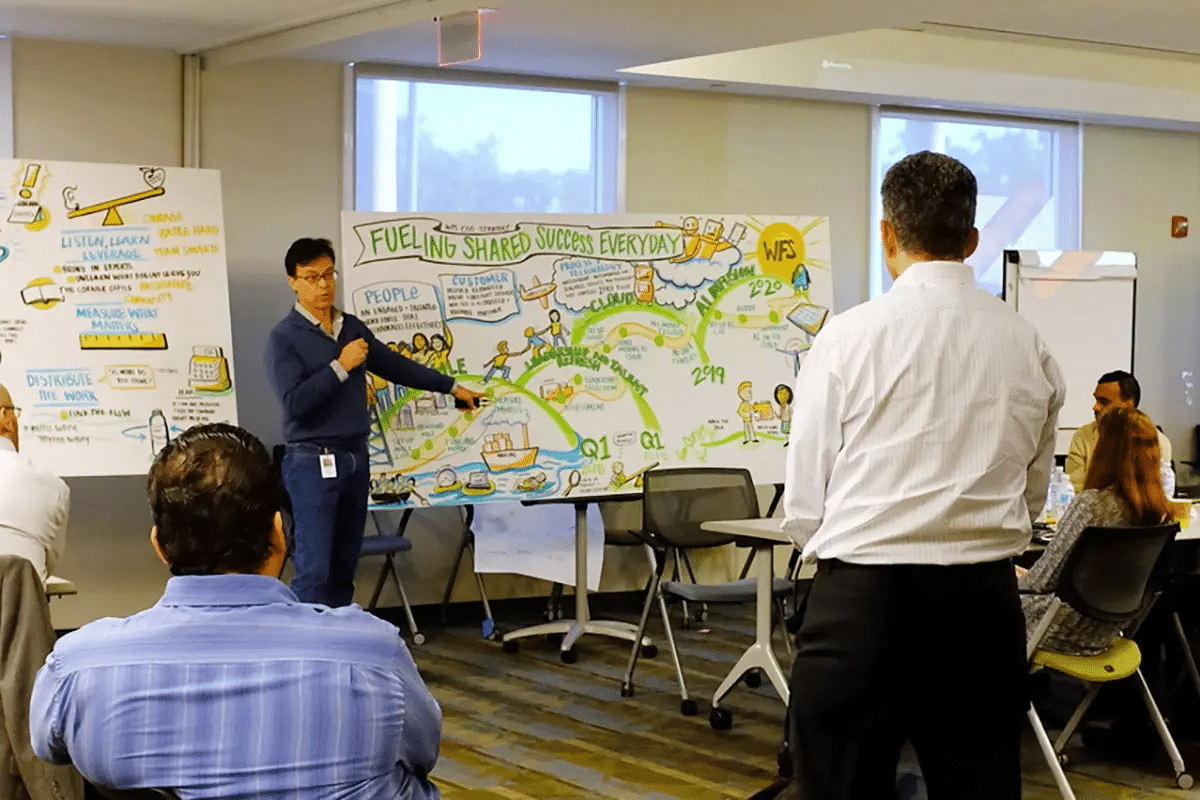
Anchor every key message visually. When a strategic priority is illustrated as a journey map or visual framework, it becomes far easier to discuss, share, and remember. Visual communication for events works precisely because it converts abstract concepts into concrete, shareable artifacts—the kind employees reference long after the meeting ends.
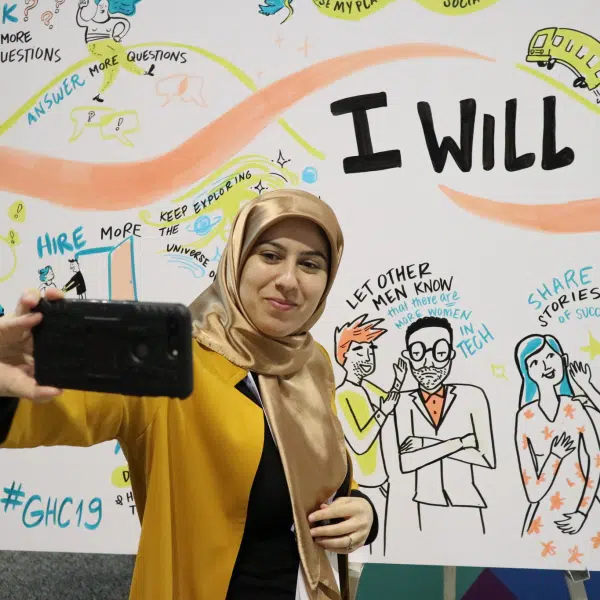
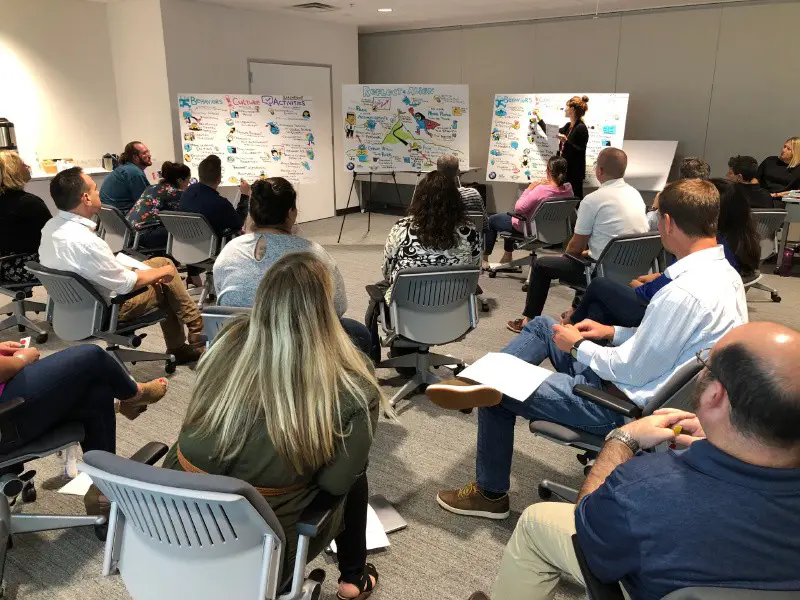
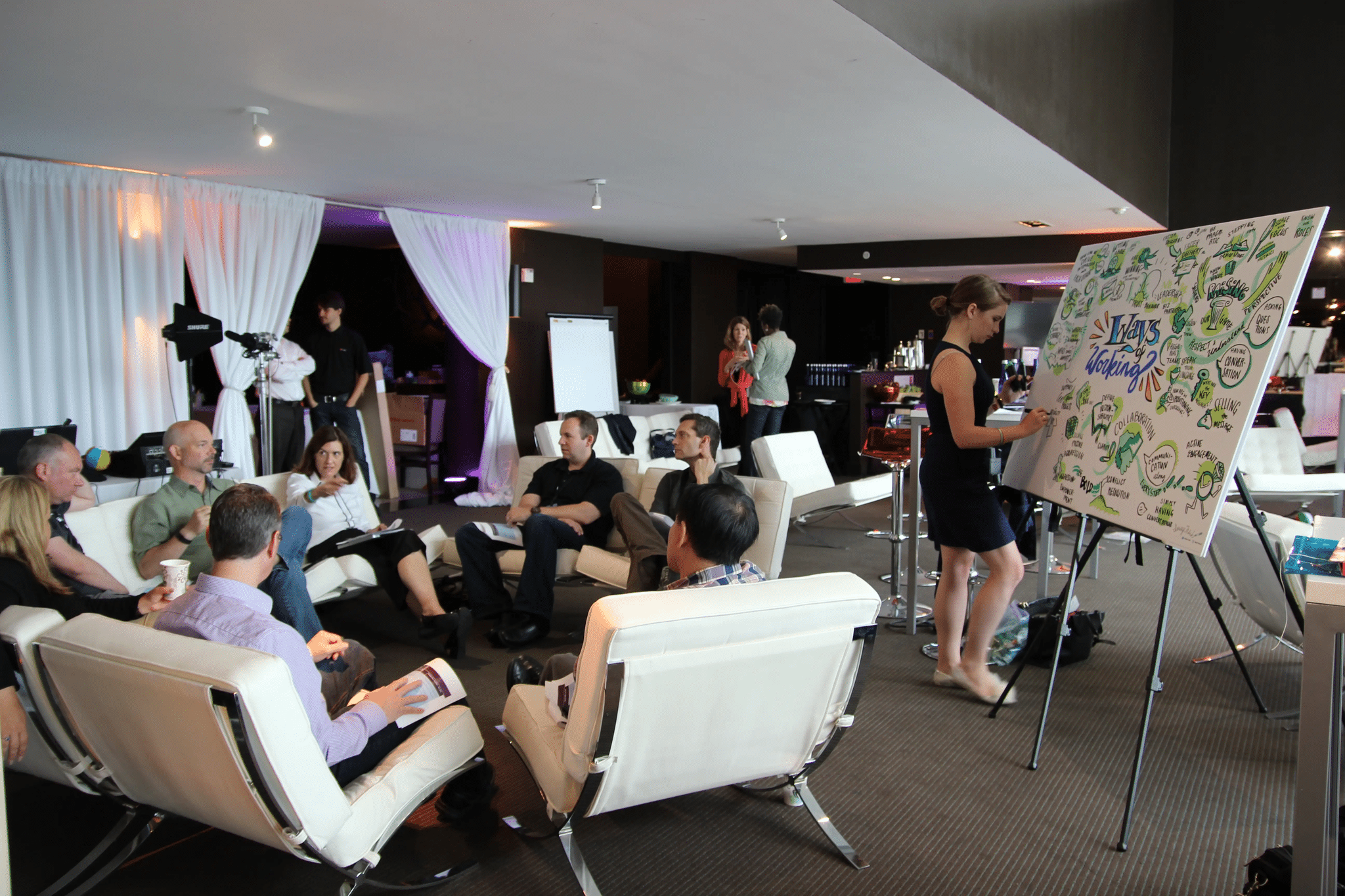
The most powerful of all audience engagement techniques in large group settings is live graphic recording: capturing the conversation in real time through visual summaries. When employees see their ideas and their leaders’ words being illustrated live, something shifts. The meeting feels less like a broadcast and more like a dialogue. Understanding how to engage a large audience this way—through visual capture, not just visual presentation—is what separates a town hall people remember from one they forget by Friday.
The Role of Graphic Recording in Audience Engagement
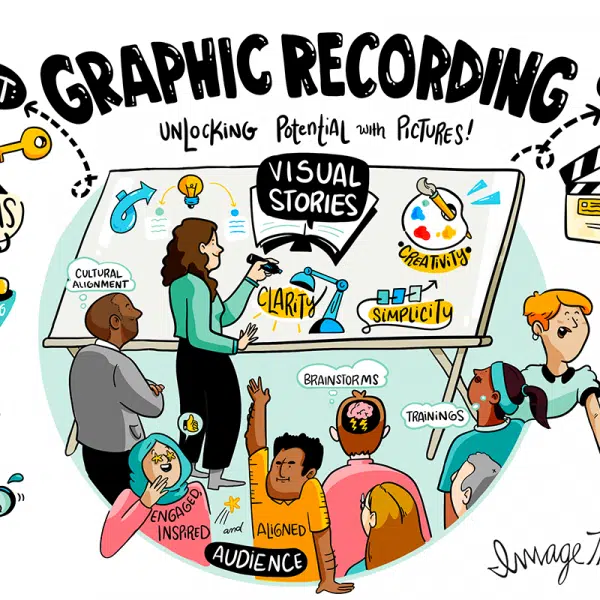
Graphic recording is the practice of translating a live conversation into a real-time visual summary—using words, icons, and illustrations rendered in the moment on a large-format canvas or digitally. It’s not transcription. It’s translation. A skilled graphic recorder synthesizes complex ideas, surfaces patterns, and makes the invisible visible in ways that help an audience understand and act on what they’ve heard.
ImageThink’s graphic recorders have worked across technology, health care, pharma, education, and nonprofit sectors—trained to listen at multiple levels and function as full creative partners, not just note-takers. When a major pharmaceutical company needed to communicate sweeping organizational change to thousands of employees, our team translated their transformation narrative into a visual metaphor that traveled from town hall to town hall, creating shared language and commitment across the organization. That’s what effective visual engagement strategies look like in practice: not decoration, but meaning-making.
Your Next Town Hall Deserves to Be Seen, Not Just Heard
ImageThink’s Visual Engagement Framework for Town Halls
Knowing how to engage a large audience is one thing. Having a repeatable system to do it is another. This six-step framework is how we help organizations build visual engagement strategies into every stage of the event:
- Before: Create a visual agenda and pre-event prompt that primes the audience.
- Opening: Use an ambient mural or illustrated context-setter to signal this gathering is different.
- During: Deploy live graphic recording in real time with at least two interactive presentation methods built in.
- Q&A: Capture questions and responses visually so the full audience can follow the dialogue.
- Close: Present the completed graphic recording as a shared artifact the room co-created.
- After: Distribute high-resolution digital editions within 24 hours and reference the visual in all follow-up communications.
Before & After: Traditional vs. Visual Town Hall
| Traditional Town Hall | Visual Town Hall | |
| Format | Slides + speaker at podium | Live graphic recording + interactive visuals |
| Audience role | Passive listeners | Active participants |
| Retention | Low after 72 hours | Significantly higher with visual anchors |
| Alignment | Inconsistent; message fades | Shared visual reference reinforces clarity |
| Remote/hybrid | Often disengaged | Live digital visuals maintain inclusion |
Learn More About Town Halls That Connect
How do you keep a large audience focused during a presentation?
Use live graphic recording to create a shared visual reference that the whole room can see and react to. Build in at least two interactive touchpoints — a visual prompt, a poll, or a group sketching moment — to interrupt passive listening at regular intervals.
What makes visual engagement strategies more effective than slides alone?
Visuals activate the whole brain, not just the language centers. They improve retention, create emotional connection, and give audiences something to react to rather than simply absorb. In large audience presentations, that distinction makes the difference between a message that lands and one that fades.
What is graphic recording and how does it work at events?
A graphic recorder listens to the conversation in real time and illustrates the key ideas live — using words, icons, and images on a large-format canvas or digitally. The result is a visual summary the entire audience can see as it takes shape, making complex ideas immediate and memorable.
How can town halls become more interactive?
Move from broadcast to dialogue. Give your audience something to contribute to — a live visual prompt, an interactive mural, or a Q&A that’s captured and illustrated in real time. When people can see their contributions take shape on a shared canvas, participation follows naturally.
Ready to Transform Your Next Town Hall?
For more than 17 years, ImageThink has helped organizations turn their most important gatherings into experiences that move people to think differently and act boldly. Whether you need a graphic recorder for a single event or a full creative partner to design a town hall your employees will remember, we’d love to help you picture your big ideas. Contact ImageThink to learn more.
Ready to Picture Your Big Idea?
"*" indicates required fields