The most expensive meeting in your organization isn’t the one you canceled. It’s the one where everyone left with a different understanding of what was decided.
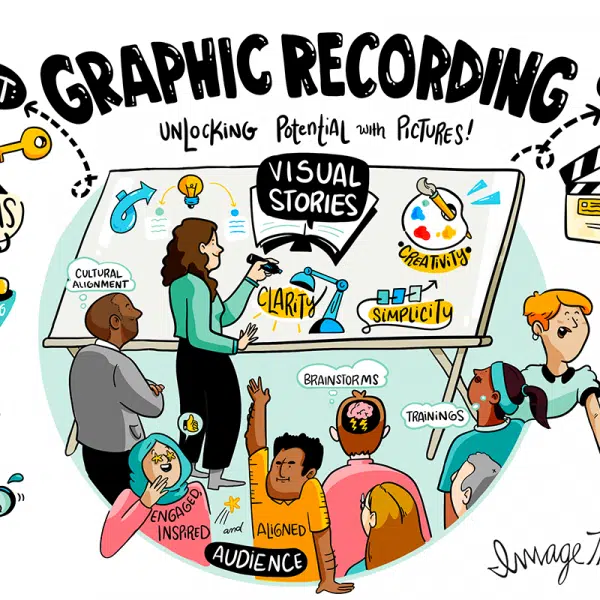
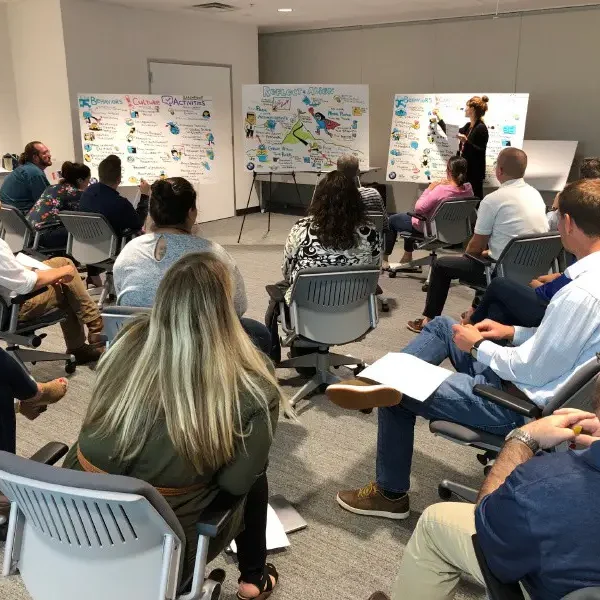
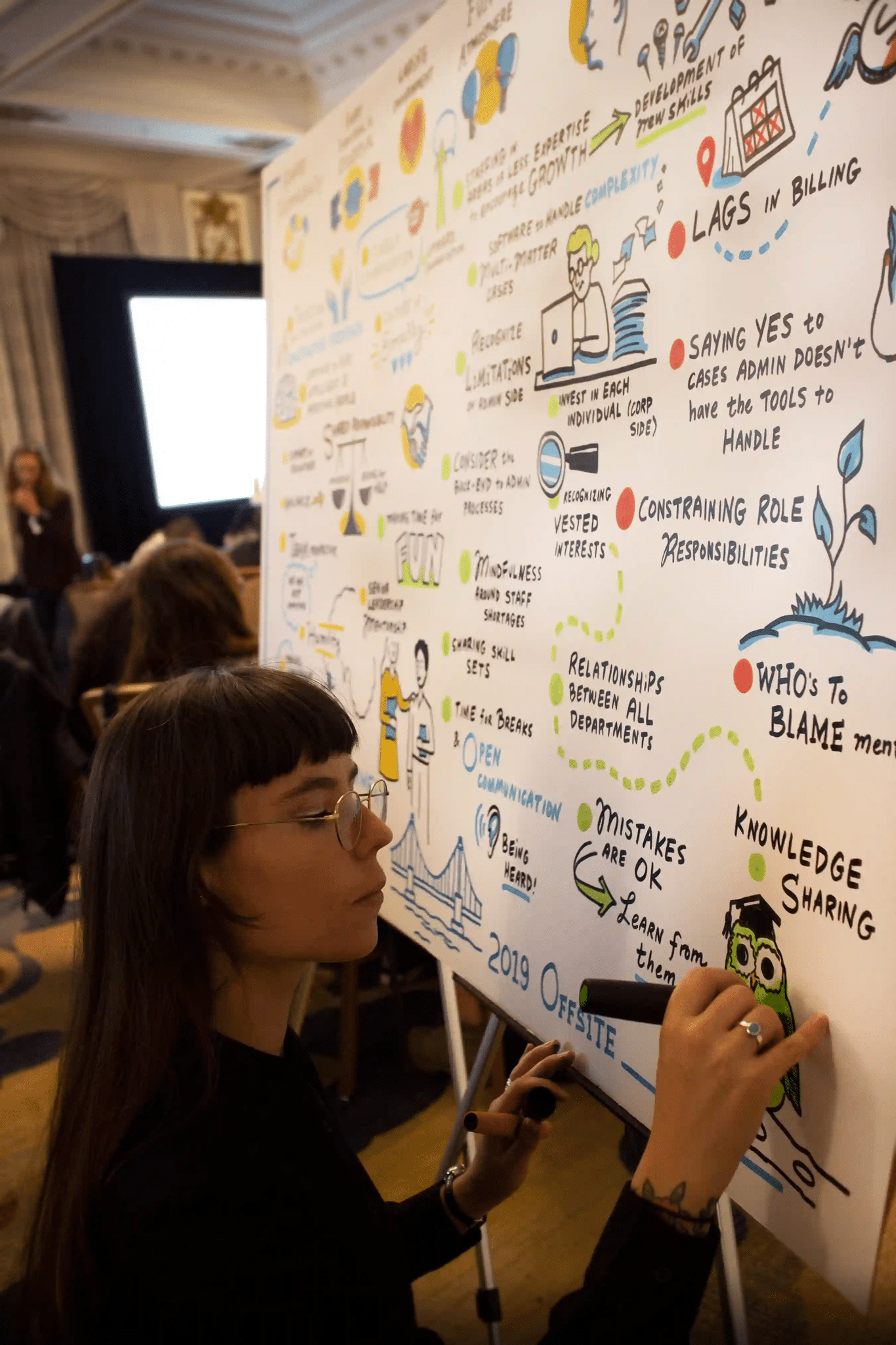
Sound familiar? It happens more than most organizations want to admit — and it happens because complex ideas stayed spoken, never visible. One of ImageThink’s graphic recorders standing before an eight-foot sheet of paper, capturing every idea, tension, and breakthrough in real time, changes that dynamic entirely.
That is large format note-taking. And for the organizations that have experienced it, there is no going back.
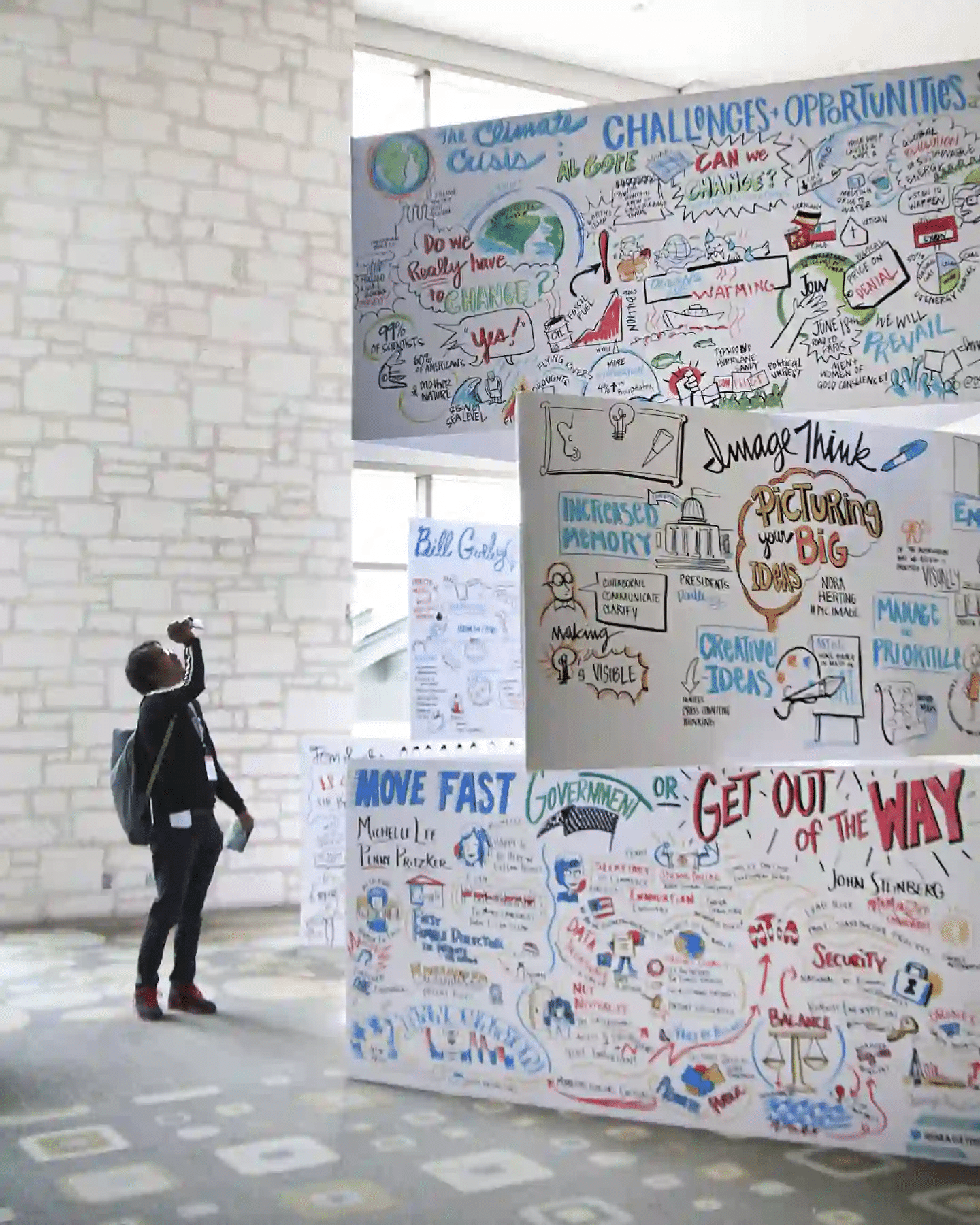
What Is Large Format Note-Taking?
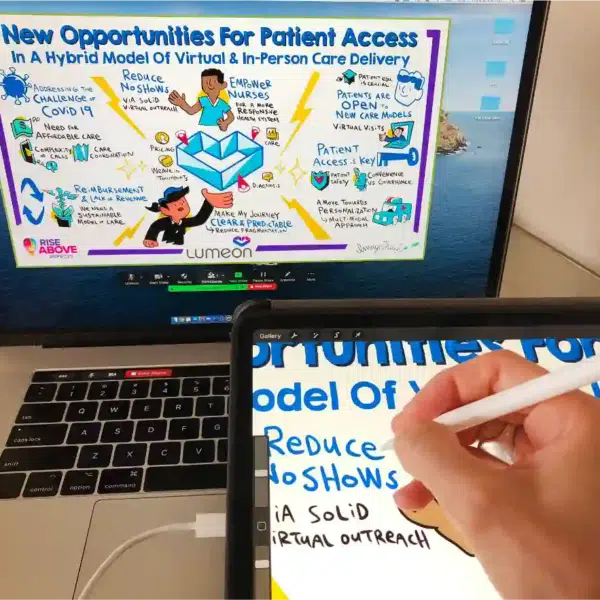
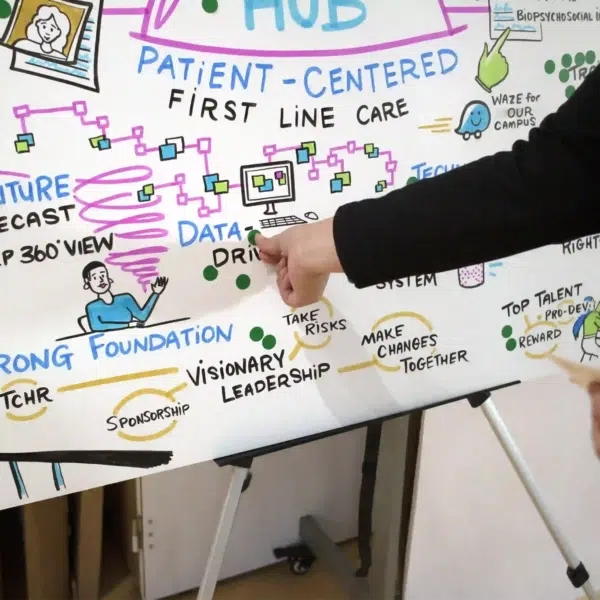
Large format note-taking is the practice of capturing ideas, themes, and key discussion points from a live meeting or event onto oversized paper or boards — typically four to eight feet wide — using words, icons, diagrams, and visual frameworks. A skilled graphic recorder synthesizes what is being said in real time, translating spoken language into a shared visual record the entire room can see.
Unlike a whiteboard sketch or a typed notes document, large format note-taking produces a complete, structured visual summary that serves as both a live facilitation tool and a lasting communication asset. It is not illustration for illustration’s sake. It is strategic visual communication with a purpose.
Why Large Format Note-Taking Matters in Corporate Settings
Corporate communication has a retention problem. Research shows that people remember roughly 10 percent of what they hear — but up to 65 percent of what they see and hear together. In high-stakes environments where alignment, decision-making, and change management are on the line, that gap is costly.
Large format note-taking closes it. By making ideas visible the moment they emerge, it ensures that everyone in the room is working from the same picture — literally. For time-pressed executives responsible for complex initiatives, that shared clarity is not a luxury. It is a competitive advantage.
In our experience at ImageThink, having supported thousands of sessions across 15 countries for some of the world’s most influential organizations, the rooms that use large format visual capture consistently reach alignment faster, leave with clearer action plans, and report higher engagement from participants.
How Large Format Note-Taking Improves Team Communication
When ideas remain spoken, they are vulnerable. People mishear, misinterpret, and misremember. Large format note-taking removes that vulnerability by externalizing the conversation — giving it a physical form that the entire group can evaluate, challenge, and build upon together.
The effect on corporate communication is immediate. Disagreements surface faster because people can point to what was actually said. Consensus builds more naturally because there is a shared reference. And the act of seeing ideas drawn in real time keeps participants focused and present in a way that a slide deck rarely achieves.

Why Visual Capture Helps Teams Retain More Information
Drawing engages the whole brain. Where linear text activates language processing alone, visual communication activates spatial reasoning, pattern recognition, and emotional memory simultaneously. The result is deeper comprehension and significantly stronger recall.
This is why ImageThink’s visual note-taking produces outcomes that outlast the meeting itself. A well-crafted graphic summary does not gather dust in a shared drive. It gets printed and pinned in war rooms. It circulates on social media. It becomes the reference document a team returns to weeks later when momentum starts to fade.
What Types of Corporate Meetings Benefit From Large Format Note Taking?
The short answer: any meeting where clarity, alignment, or engagement matter. In practice, the organizations that benefit most are those running strategic planning sessions, leadership offsites, change management workshops, innovation sprints, and large-scale conferences. These are precisely the environments where the stakes are highest and the cost of miscommunication is greatest.
ImageThink has brought large format note-taking to technology summits, pharmaceutical leadership retreats, education conferences, and nonprofit strategy sessions. Across every sector and every format, the pattern holds: visual capture transforms passive audiences into active participants, and complex discussions into clear, actionable pictures.
Large Format Note-Taking vs. Traditional Meeting Notes
| Large Format Note-Taking | Traditional Meeting Notes | Whiteboard Summary | |
| Visible in real time | ✓ | ✗ | ✓ |
| Captures complex ideas visually | ✓ | ✗ | Partial |
| Sharable after event | ✓ | ✓ | ✗ |
| Supports team alignment | High | Low | Medium |
| Drives meeting engagement | High | Low | Medium |
| Scales to large audiences | ✓ | ✗ | ✗ |
| Enduring content asset | ✓ | Partial | ✗ |
Traditional meeting notes capture what was said. Large format note-taking captures what it meant — and makes that meaning immediately visible to everyone in the room. The difference is not cosmetic. It is the difference between a record and a communication tool.
How Large Format Note-Taking Supports Alignment and Collaboration
Alignment is not something that happens automatically when smart people gather in a room. It requires a shared picture of where the group is, where it is going, and what stands in the way. Large format note-taking creates that picture — and it does so at the moment, before the room disperses and the energy dissipates.
At ImageThink, we have seen this dynamic play out with Fortune 50 companies navigating restructures, with health and pharma teams aligning on strategy, and with global nonprofits building a shared vision across cultures and time zones. The visual record does not just support collaboration. It enables it.
Ready to see what large format note-taking can do for your next meeting or event? Explore ImageThink’s graphic recording and visual facilitation services and bring your biggest ideas to the surface.
Frequently Asked Questions About Large Format Note-Taking
What is large format note-taking? Large format note-taking is a visual communication practice where a skilled graphic recorder captures ideas, themes, and key points from a live conversation onto oversized paper or boards — typically 4 to 8 feet wide — in real time. The result is an immediate, shared visual reference that the entire room can see and respond to.
How does large format note-taking help teams? It creates a shared visual record that improves comprehension, encourages participation, and supports recall. When people see their words reflected in a drawing, they feel heard — and alignment happens faster.
What types of meetings benefit most? Strategic planning sessions, leadership offsites, change management workshops, large conferences, and innovation sprints all benefit significantly. Any meeting where alignment and clarity are critical is a strong candidate.
How is it different from regular meeting notes? Traditional notes are linear, text-heavy, and rarely reviewed. Large format note-taking produces a visual summary that communicates relationships between ideas, captures energy and tone, and gives teams a sharable artifact they will actually use.
Why do companies use visual note-taking in corporate settings? Because it works. Research consistently shows that people retain significantly more information from visual communication than text alone. For high-stakes meetings and events, that edge in retention and alignment can translate directly into better decisions and faster execution.
Ready to Picture Your Big Idea?
"*" indicates required fields