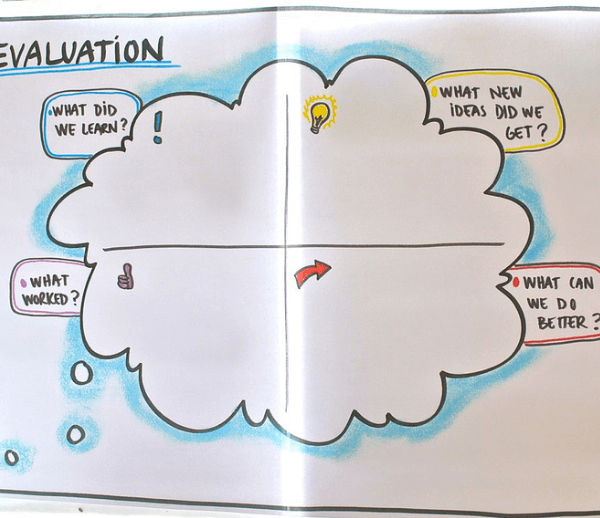
What Is Graphic Facilitation?
Graphic facilitation is the use of live visuals to guide a group through a conversation. A graphic facilitator listens, synthesizes ideas, and draws them in real time so participants can see their thinking, stay aligned, and reach better decisions together. It goes a step beyond graphic recording, which simply captures a discussion as it happens. With more than seventeen years of experience in graphic facilitation and meeting design, ImageThink has distilled what separates a good session from a great one into seven essential elements, covered in full below.
More than 17 years of graphic facilitation. Trusted for strategy sessions, kickoffs, and company-wide meetings, in person and virtually.
Video: ImageThink walks through how visuals capture and communicate ideas in real time, the same synthesis-and-listening skillset that underpins graphic facilitation.
Graphic Facilitation vs Graphic Recording: What Is the Difference?
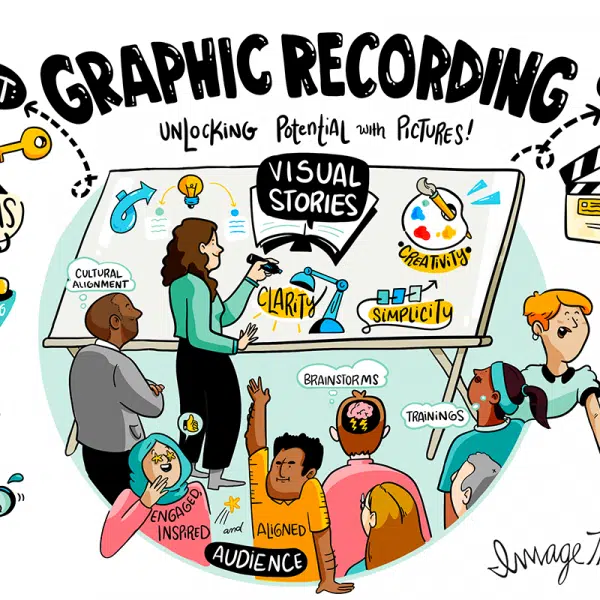
The difference between graphic recording and graphic facilitation comes down to role. Graphic recording captures a conversation in real time, translating what is said into a visual summary the room can follow and reference later. The recorder is a skilled observer who listens, synthesizes, and visualizes, but stays out of the driver’s seat. Graphic facilitation uses that same visual skillset to actively lead the discussion. Rather than only documenting what happens, a graphic facilitator shapes what happens, guiding the group through exercises, questions, and visual frameworks that move the conversation toward a decision or outcome.
Put simply, graphic recording answers “what did we say,” while graphic facilitation answers “where do we go from here.” A graphic recorder gives you a clear, memorable record of the ideas in the room. A graphic facilitator does that too, then goes further by designing the agenda, reading group dynamics, and helping the team align around shared goals and clear next steps. Both make complex ideas visible and easier to act on. The right choice depends on whether you mainly need to capture the conversation or to actively steer it toward results.
Curious what this looks like in practice? See the work of a graphic facilitator from planning through wrap-up.
When to Use Graphic Facilitation
Graphic facilitation is most valuable for strategy sessions, kickoffs, brainstorms, and company-wide meetings where alignment matters, whenever a group needs to explore complex ideas, build consensus, and leave with a clear, shared picture of the plan. The same approach works for in-person, hybrid, and virtual graphic facilitation, so distributed teams can stay just as aligned as a room together in person. For a closer look at leading successful strategy sessions, SKOs, and company-wide meetings, see our full breakdown.
7 Key Elements of Graphic Facilitation
1. Real Time Strategy
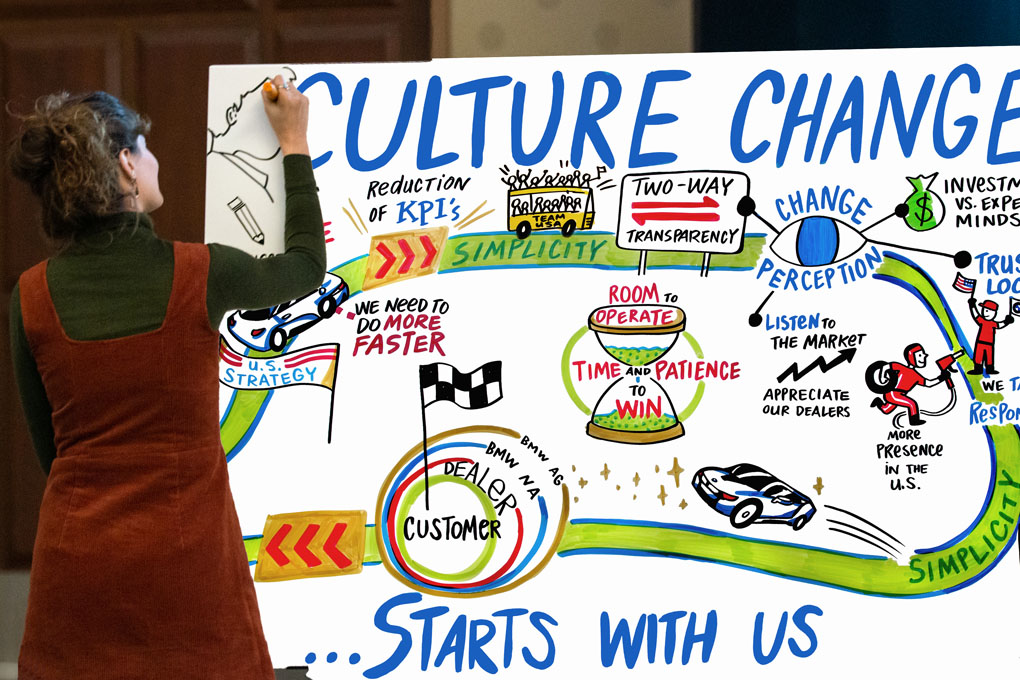
Any graphic recorder worth their salt is an expert at synthesizing complex content into succinct points. But graphic facilitation requires turning that skill up a notch. Graphic facilitators not only capture information – they steer the discussion. By reflecting information back to the room and using it to ask relevant questions, they help move the conversation forward. Beyond recognizing key insights, graphic facilitators have the ability to identify discussion gaps, and work to explore them.
Just as importantly, graphic facilitation requires recognizing when a topic warrants further investigation, even if it means revising the meeting’s agenda in real time. That aptitude only comes with extensive experience in strategy, brainstorming, and ideation sessions, and it’s indispensable if the meeting is to be a success.
2. Reading Group Dynamics and Corporate Psychology
There are many factors that feed into a group’s unique dynamic. Who’s in the room? What is the size of the group? Is the subject matter at hand sensitive or confidential? What is the context for the meeting? A conference room filled with C-Suite executives, for instance, will create a very different discussion than a meeting mix of upper and lower management. An ideation for new product design will likely be much more animated than one examining why a product or project has been unsuccessful.
Experienced graphic facilitators know what questions to ask in order to anticipate the group’s dynamic, and to arm themselves with the tools needed to make the meeting go smoothly. From templated boards to keep everyone on the same page, to acting as a mediator if conversation becomes heated. It’s arguably the most difficult task of a graphic facilitator, which further explains its value in the meeting room.
3. Agenda Design Prowess
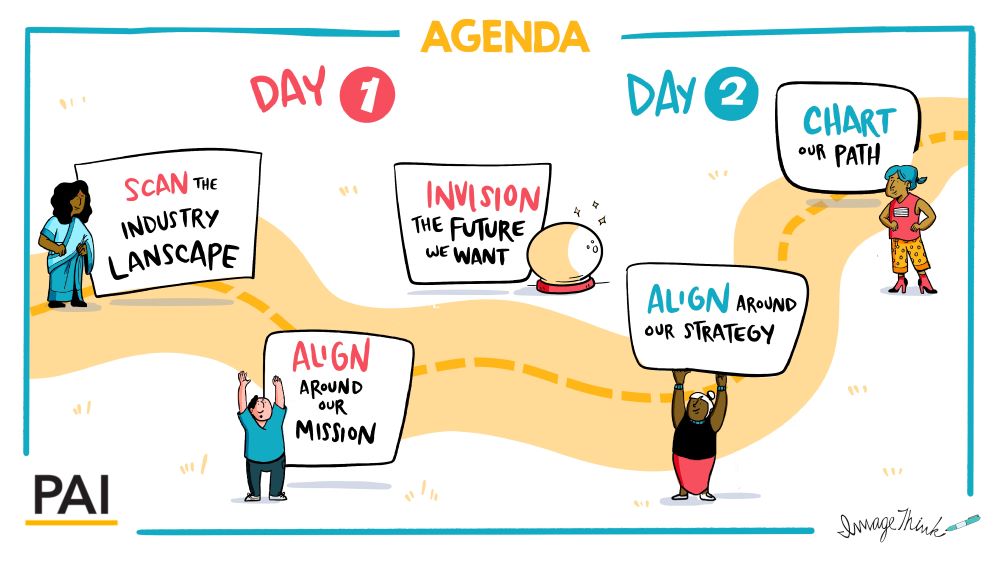
Successful graphic facilitation begins long before the meeting does. A nuanced, tailored agenda created collaboratively with a client ensures that the time spent in the meeting room is spent purposefully. While certain elements can be carried from meeting to meeting, each agenda requires a thorough understanding of the client’s unique needs and objectives. When designing an agenda, understanding how one topic will flow into the next, how to maintain the engagement of participants, and how to hold attention is crucial.
4. Knowledge of Templates and Creative Exercises
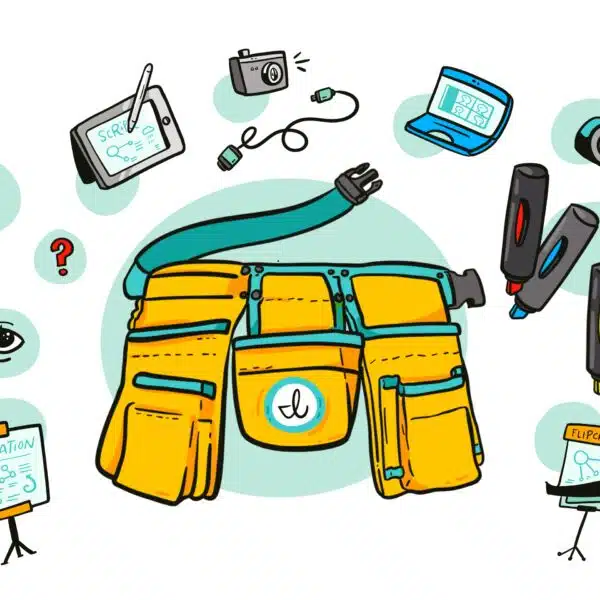
Over time, graphic facilitators develop a mental toolkit of interactive exercises, visual templates, and creative problem solving techniques for any topic or situation. But it’s not enough to know how to create a priority map or Stop/Start/Continue chart. Graphic facilitators must have these tools in their back pocket, and just as importantly, know when to use them and how to tailor them to the client’s unique objectives.
Building that toolkit takes years of practice. For a closer look at the graphic facilitation tools and templates practitioners rely on most, see our full breakdown.
5. Grace Under Pressure
Materials don’t arrive in time. Key speakers call out sick. Technology fails. No matter how meticulous the planning or preparation is, hiccups happen. As graphic facilitators, it’s our job to not only roll with the punches but to quickly improvise a way to bring things back on track.
Part of a facilitator’s job is to be the calmest person in the room. More than just confidence; a graphic facilitator possesses the mental agility that allows for quick and creative problem solving. For some, it’s an innate quality. For most, though, it’s only learned with years of experience.
6. Full Integration with the Meeting Team
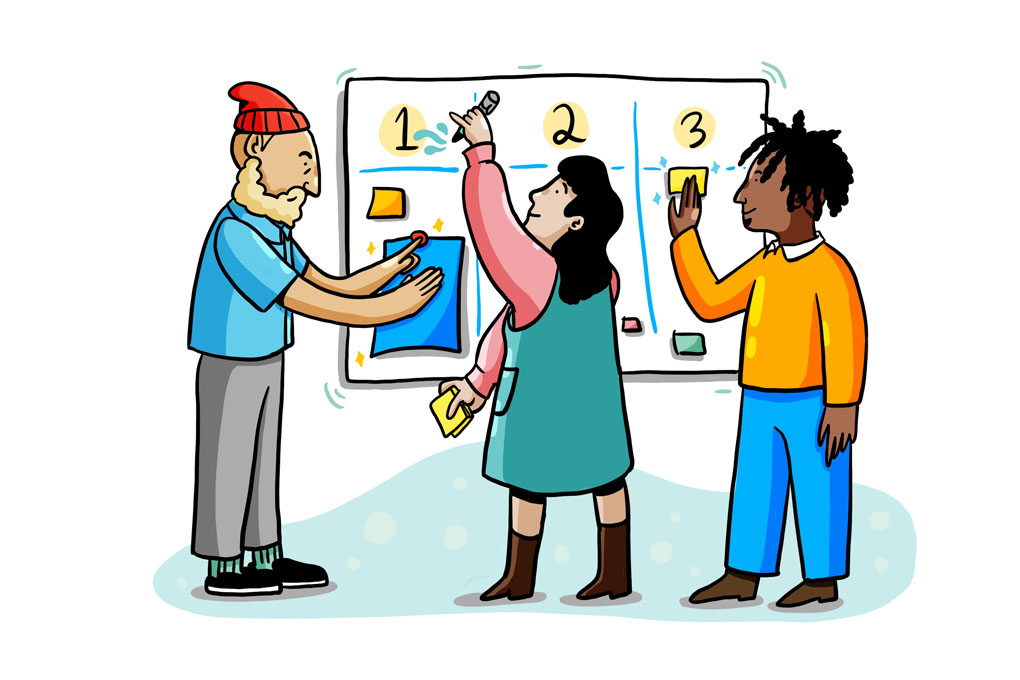
Graphic facilitation is usually carried out in support of other components of a facilitation package. For that reason, it’s not unusual for a graphic facilitator to collaborate with others to support a larger meeting.
Adept graphic facilitators will clarify what his or her role is within the context of a team, articulate what support they can provide during different parts of the day, and ask questions related to the goals of the meeting. There should be an active and ongoing level of presence in the room, marked by curiosity and the ability to be flexible with changing meeting dynamics.
7. Knowing What Comes Next
A meeting is only as successful as the next steps it generates. Graphic facilitators ensure that by the time the meeting wraps, concrete action items are identified and if possible, owners and due dates are assigned. They also help move the client’s team or organization forward with a post-event session summary, or by sharing their observations as a third party with the client.
At ImageThink, we conclude each of our engagements by practicing what we preach in the last phase of our ImageThink Method (TM): Reflection. Only by taking the time after the meeting concludes to provide a client the tools to carry key learnings forward, can a graphic facilitator ensure lasting impact.
Need help organizing your next big meeting?
Learn more about our graphic facilitation service, and how we can empower your team to reach tangible results here. Or get in touch with us today!
Ready to See Graphic Facilitation in Action?
Tell us about your next meeting, and we’ll show you what’s possible.
"*" indicates required fields
Frequently Asked Questions About Graphic Facilitation
What is graphic facilitation?
Graphic facilitation is the use of live visuals to guide a group through a conversation. A facilitator listens, synthesizes ideas, and draws them in real time so participants can see their thinking, stay aligned, and reach better decisions together.
What is the difference between graphic facilitation and graphic recording?
Graphic recording captures a discussion visually as it happens. Graphic facilitation goes further: the practitioner actively shapes the session, using visuals to prompt input, organize ideas, and move the group toward an outcome.
What does a graphic facilitator do?
A graphic facilitator plans the session with you, listens for key ideas, and translates them into clear visuals that build shared understanding. They use those visuals to focus discussion, surface connections, and help the group commit to next steps.
When should you use graphic facilitation?
Graphic facilitation is ideal for strategy sessions, kickoffs, brainstorms, and company-wide meetings where alignment matters. It is most valuable when a group needs to explore complex ideas, build consensus, and leave with a clear, shared picture of the plan.
Does graphic facilitation work for virtual and hybrid meetings?
Yes. Digital graphic facilitation captures ideas on a shared screen that remote and in-person participants can see together in real time, keeping distributed teams engaged and aligned just as effectively as in the room.
What are the essential elements of graphic facilitation?
The essentials are active listening, real-time synthesis, clear visual language, and strong facilitation. A skilled practitioner combines drawing, composition, and group-process skills to turn a live conversation into a shared visual that drives decisions.
Ready to Picture Your Big Idea?
"*" indicates required fields