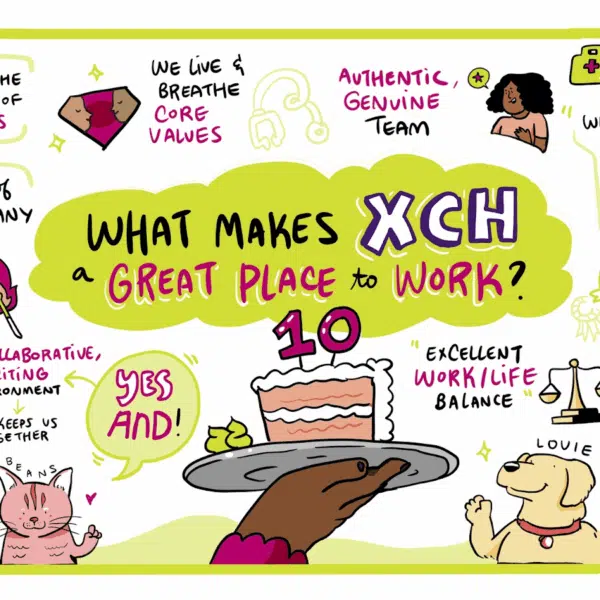
A one-page vision map is a single large-format visual that captures a leadership team’s direction—purpose, priorities, and the path to get there—all on one canvas everyone can see at once. It aligns executives faster than a long deck because the whole strategy is visible, memorable, and shared in a single glance.
This guide covers what a vision map is, why one page tends to outperform sixty slides, how a map gets built, when to use one, and how to keep it working after the offsite ends.
What a one-page vision map is and why it aligns teams
A one-page vision map is a single visual that holds the vision, the few priorities that matter, and the relationships between them, built so an entire leadership team can hold the same picture in mind.
Alignment improves when everyone is literally looking at the same thing. A shared image closes the “we heard different things” gap that a 60-slide deck almost guarantees.
A vision map is a synthesis tool, not decoration. The act of mapping forces real decisions about what is, and isn’t, a priority. It complements detailed planning documents rather than replacing them.
The alignment problem vision maps solve
Leadership teams routinely leave the same meeting with different interpretations of the strategy.
Slide decks are part of the problem. Slides are seen in sequence, one at a time, so the connections between priorities get lost, and recall drops fast. Dual coding theory and the picture superiority effect help explain why people tend to encode and recall images differently than text, and a single strong image tends to stick where a string of bullet points doesn’t.
Misalignment has a real cost: duplicated effort, competing priorities, and slower execution long after the offsite ends.
What goes on a one-page vision map
A strong vision map typically includes:
- The vision, or north star, stated in plain language
- The strategic priorities the team commits to, usually three to five
- The relationships and dependencies between those priorities, shown spatially rather than as a list
- Key milestones or a rough time horizon
- A metaphor or image that makes the direction memorable, such as a journey, a mountain, or a bridge, chosen to fit how the organization already talks about its work
What’s left off matters just as much. A vision map shows the few things that matter, not every initiative on the roadmap.
Why one page beats sixty slides
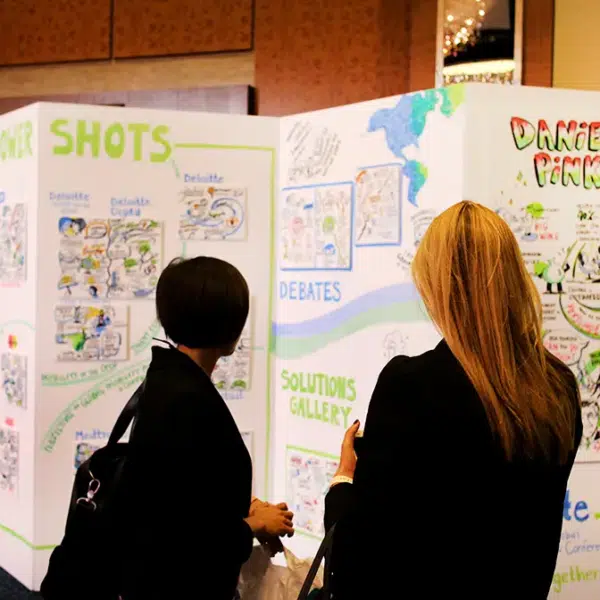
A single canvas keeps the whole strategy in view, so a team debates trade-offs against the full picture instead of one slide at a time. People recall a distinct image far better than a sequence of bullet slides. Limited space forces prioritization, since leaders have to decide what truly matters when everything can’t fit. And the same map can anchor the offsite, the all-hands that follows, and the wall of the office afterward.

How a one-page vision map gets built
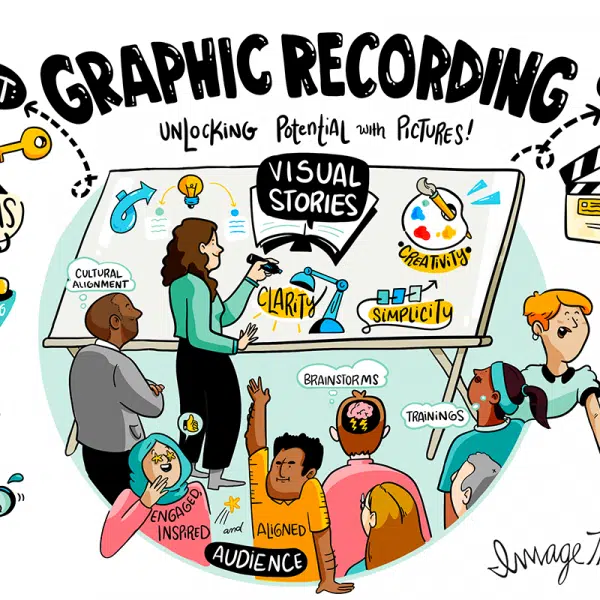
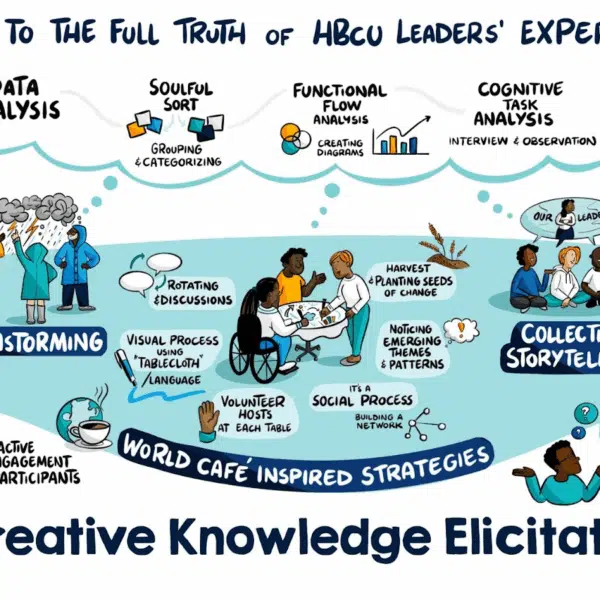
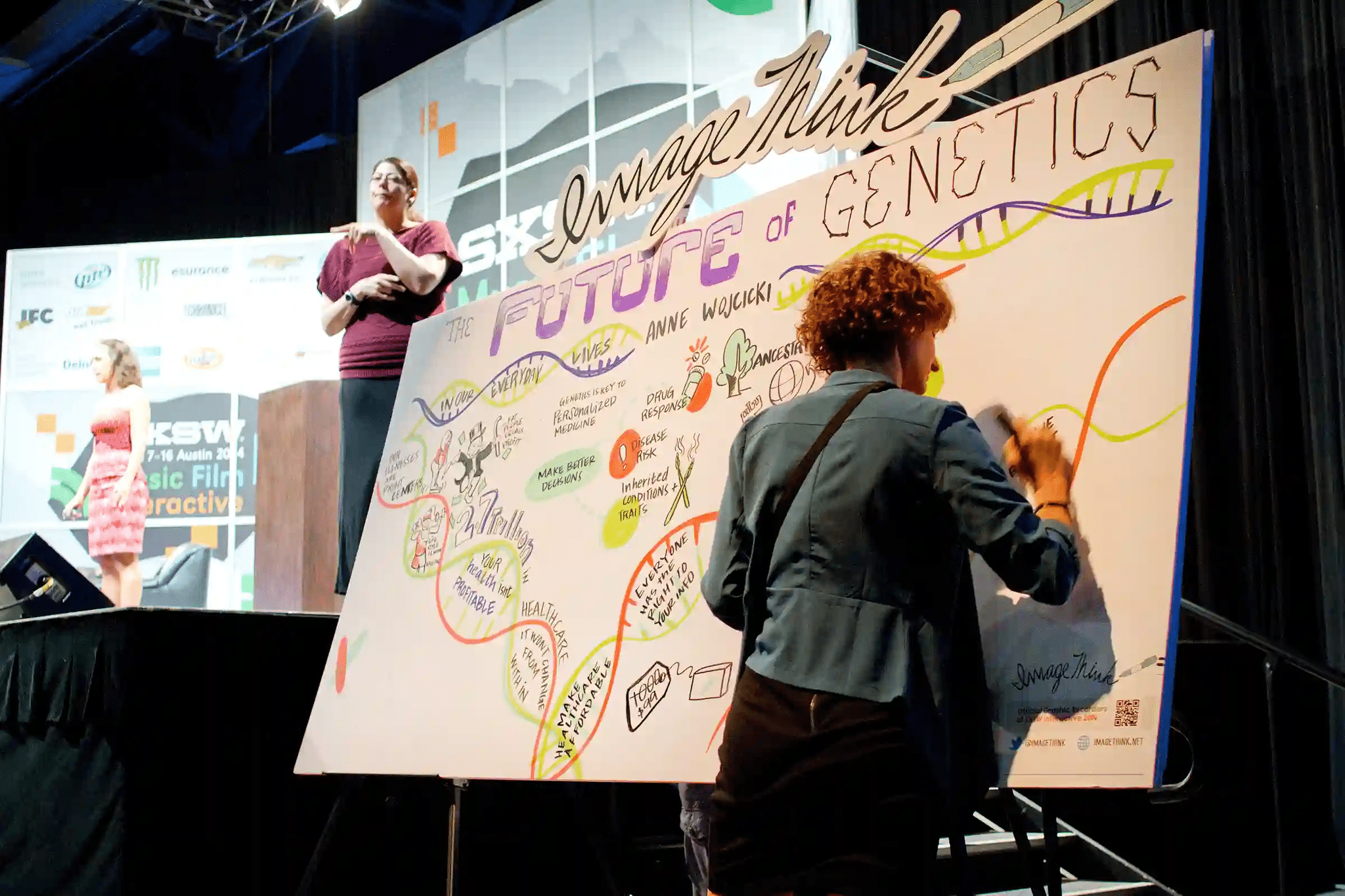
Many vision maps are captured live. A graphic recorder or visual facilitator listens to the leadership discussion and draws the vision and priorities as the team talks. Leaders see their own words take shape in real time, which builds ownership and surfaces disagreement while it can still be resolved, rather than after the meeting ends.
A typical flow: clarify the vision, surface and cluster priorities, agree on the few that make the cut, then render them into a single composition. A map can also be designed after a session, working from notes, though live capture tends to build more buy-in since the team watches the synthesis happen. At ImageThink, our graphic recording and meeting facilitation services are built around producing this kind of synthesized, one-page visual from a live leadership discussion.
Working with a graphic recorder vs. doing it yourself
A DIY sketch works for a rough, internal draft when speed matters more than polish. A professional graphic recorder adds value when the output needs to be clear, on-brand, reusable, and credible in front of a senior audience, and live facilitation keeps the conversation moving and neutral in a way that’s difficult for a leader who is also participating. The right approach matches the level of polish and neutrality to the stakes of the alignment.
When to use a one-page vision map
Vision maps tend to earn their place at:
- Leadership offsites and strategy sessions built around shared direction
- Post-merger or reorganization moments, when teams need one unifying picture
- Annual or quarterly planning kickoffs
- All-hands meetings, to cascade strategy to the broader organization
- Moments when a previous strategy didn’t land, and leaders suspect misalignment is the cause
Making the map work after the meeting
A vision map only creates alignment if it stays visible and gets referenced. Share it widely as a digital file, a large-format print, and a recurring reference in leadership updates. Use it to test new initiatives by asking whether they fit the picture the team agreed on, and revisit and revise it at the next planning cycle so it stays current instead of becoming wallpaper. Pair it with the detailed plans it summarizes, so the team can move from picture to action.
Key takeaways
A one-page vision map puts the whole strategy on one canvas. It tends to align a leadership team faster than a long deck, forces real prioritization, and stays memorable well past the meeting where it was made.
The value comes from the synthesis and the shared sightline, not from the artwork itself. Treat the map as a living reference, not a one-time artifact.

FAQ
What is a one-page vision map?
A single large-format visual that captures a team’s vision, top priorities, and the path between them, so everyone can see the whole strategy at once.
How is a vision map different from a roadmap?
A vision map shows the why and the few priorities that matter on one canvas. A roadmap sequences the what and when over time. The two complement each other.
Do vision maps actually improve alignment?
A shared visual tends to reduce divergent interpretations, since the team keeps referencing one picture instead of a sequence of slides. Images are generally easier to recall than text-heavy slides, which is part of why the format works.
Who creates the vision map?
It can be drawn live by a graphic recorder or visual facilitator during the session, or designed afterward from notes. Live capture tends to build more ownership, since the team sees the synthesis happen.
How many priorities should a vision map show?
Roughly three to five is common. The constraint is the point: it forces the team to decide what truly matters.
How do you keep a vision map from becoming wallpaper?
Keep it visible, reference it in leadership updates, use it to vet new initiatives, and revise it each planning cycle.
Ready to Picture Your Big Idea?
"*" indicates required fields