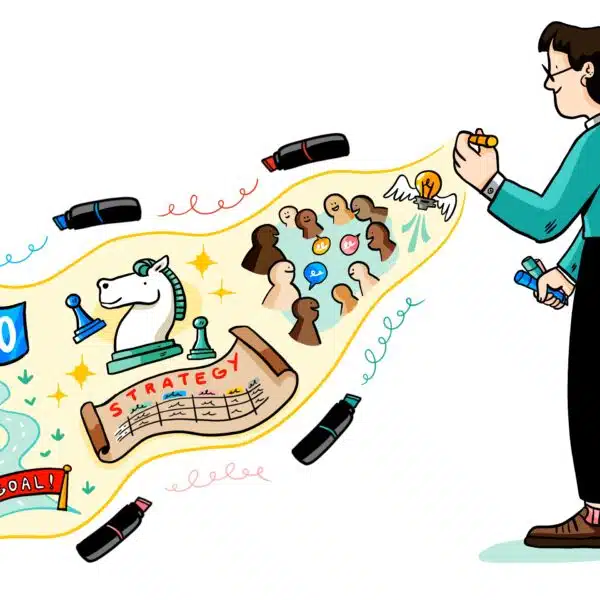
Nonprofit strategic planning is one of the most important conversations an organization can have — and one of the hardest to get right. The stakes are high. The participants are diverse. The priorities are often genuinely competing. And the outcome needs to be clear enough to guide decisions for the next three to five years. Most organizations approach it the same way: a facilitator, a slide deck, a flip chart, and a typed summary distributed days later that no one fully trusts. Sound familiar? The problem is not the people in the room. It is the absence of a shared visual reference that everyone can see, contribute to, and align around in real time. That is what visual facilitation brings to these sessions — and it is why organizations that use it consistently leave with sharper priorities, stronger stakeholder alignment, and a clearer path forward than those that do not.
What Is Visual Facilitation?
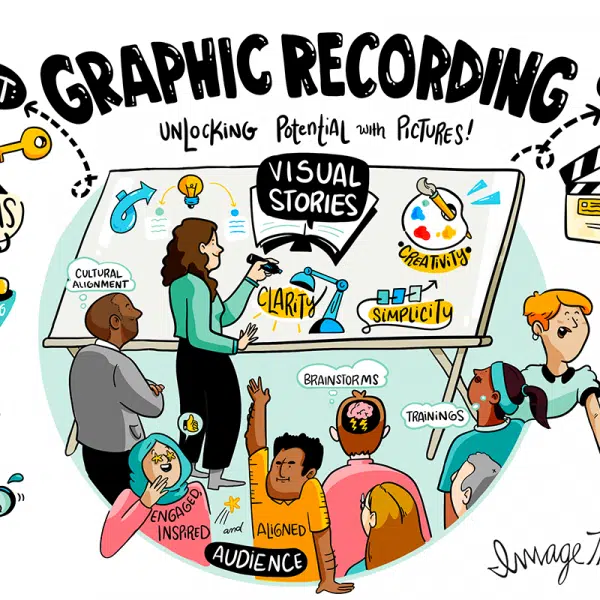
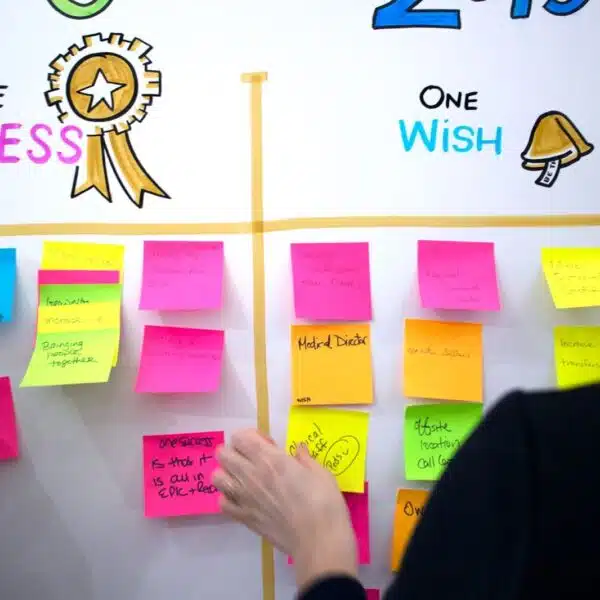
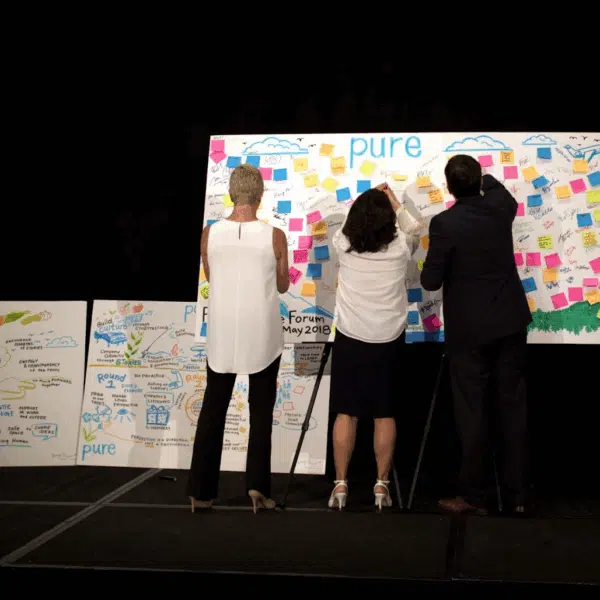
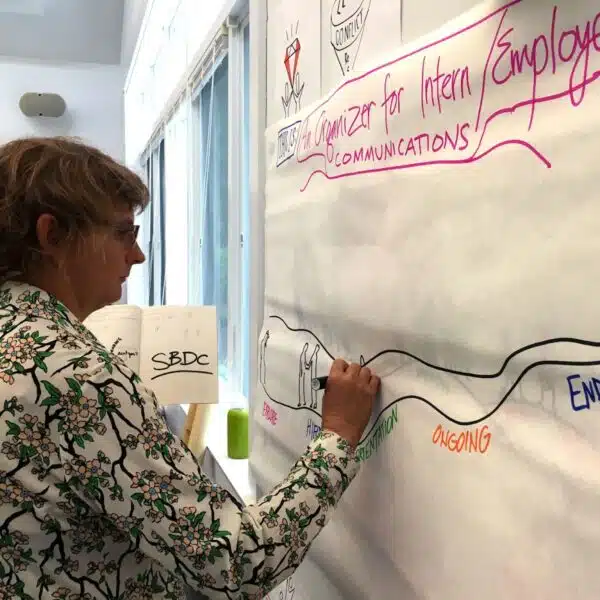
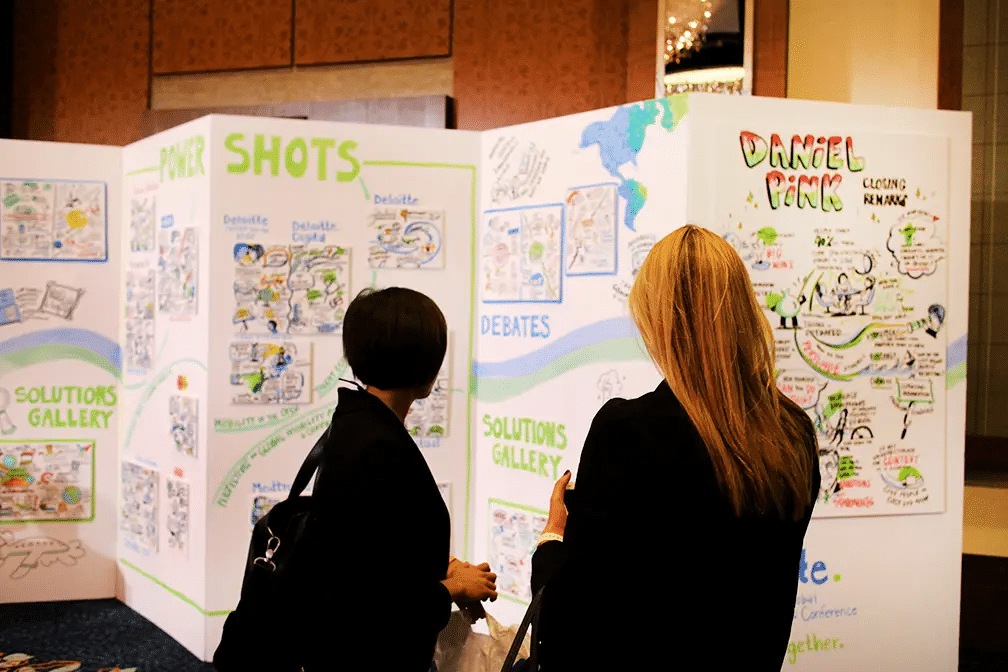
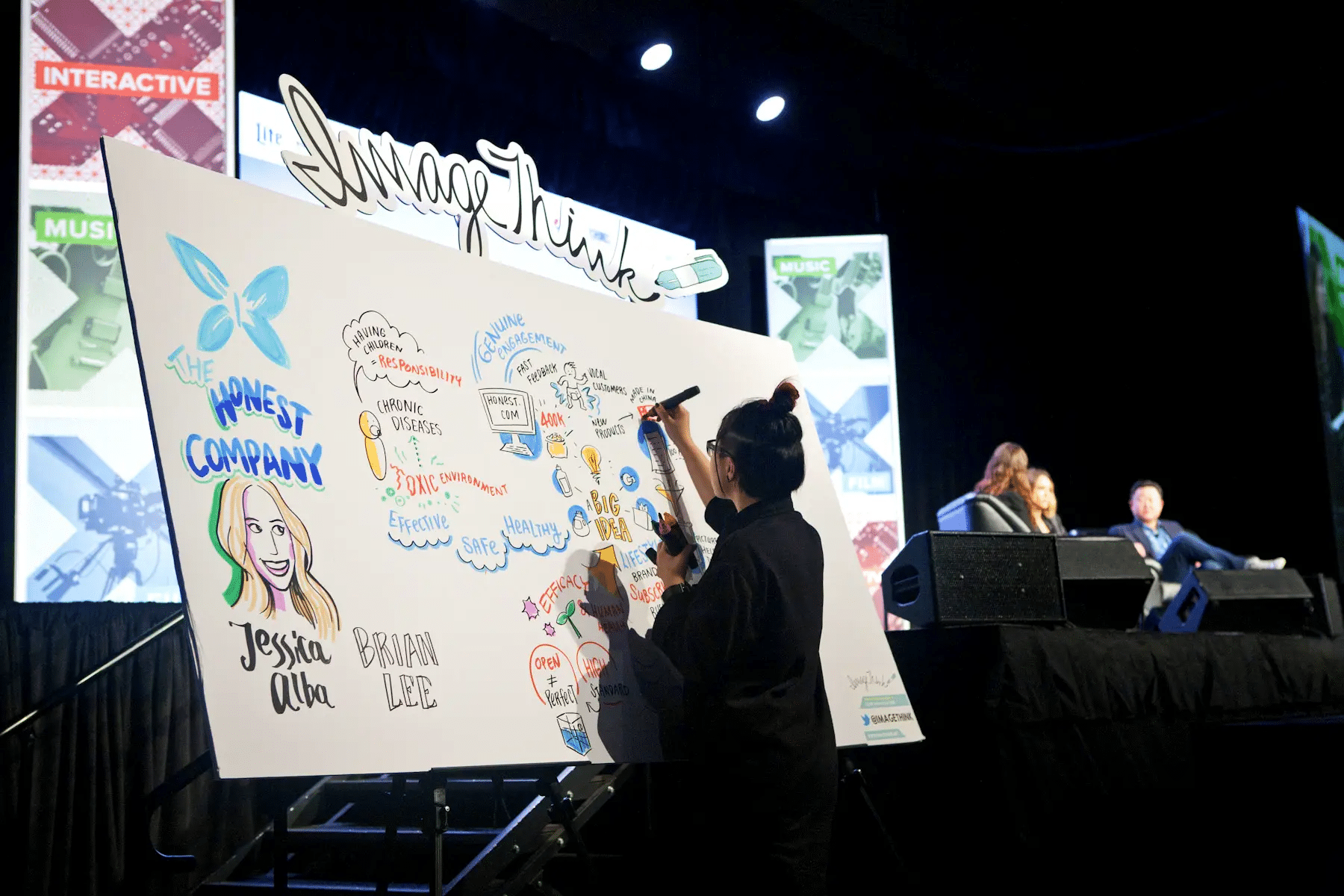
Visual facilitation is the practice of guiding a group conversation while capturing key ideas, themes, and decisions in real time using hand-drawn visuals — words, icons, diagrams, and frameworks — on large-format paper or digital boards. It combines skilled facilitation with graphic recording to create a shared visual record that the entire group can see and respond to as the conversation develops. Unlike a slide deck, which presents information to a group, or a note-taker, who records it privately, this approach makes thinking visible to everyone in the room simultaneously. In a nonprofit strategic planning session, that visibility changes the dynamic entirely — from a presentation to a genuine co-creation of shared direction.
Why Nonprofit Strategic Planning Needs Clearer Visual Communication
These sessions bring together stakeholders who may have very different relationships to the organization — board members, executive staff, program teams, funders, and community representatives. Each brings a different set of priorities, a different vocabulary, and a different definition of success. Without a shared visual reference, these differences stay invisible until they surface as conflict — often after the session, when implementation begins and teams discover they understood the plan differently. Visual facilitation surfaces those tensions early, in the room, where they can be addressed constructively. The result is a plan that reflects genuine alignment rather than the appearance of it.
How Visual Facilitation Supports Mission, Vision, and Goal Setting
Mission and vision planning is the foundation of nonprofit strategic planning — and it is also where the most significant misalignments tend to hide. Organizations that have operated for years often carry implicit, unexamined assumptions about what their mission means in practice. This approach draws those assumptions out and makes them legible. When a skilled visual facilitator renders mission statements, strategic priorities, and long-term goals visually in real time — mapping relationships, surfacing contradictions, and clustering areas of consensus — the group can see its own thinking with a clarity that spoken discussion alone rarely produces. Sessions that use this method consistently produce more precise, more actionable outputs than those that do not.
Ready to make your mission visible?
What Types of Strategic Planning Sessions Benefit Most?
The sessions that benefit most are those where diverse stakeholders need to reach shared understanding and make decisions from complex, often contested information. In practice, the most common high-value applications include:
- Annual and multi-year strategic planning retreats, where board and staff need to build a shared roadmap
- Theory of change workshops, where organizations need to map the logic connecting their activities to their intended impact
- Mission and vision reviews, where long-held assumptions need to be surfaced and examined together
- Stakeholder engagement sessions, where community voices need to be captured and integrated into planning
- Priority-setting intensives, where limited resources need to be allocated against competing organizational goals
In each of these formats, the visual record does more than capture what was said. It actively shapes what becomes possible — making patterns visible, accelerating decisions, and giving every participant a shared picture of where the organization is going and why.
Visual Facilitation vs. Traditional Strategic Planning Notes
| Visual Facilitation | Traditional Strategic Planning Notes | |
| Captures ideas in real time | ✓ | ✓ |
| Shows relationships between priorities | ✓ | ✗ |
| Visible to all participants during session | ✓ | ✗ |
| Drives stakeholder alignment | High | Low |
| Surfaces tensions and trade-offs | ✓ | Partial |
| Supports mission and vision planning | ✓ | Partial |
| Shareable asset after session | ✓ | ✓ |
| Keeps diverse stakeholders engaged | High | Low |
A typed summary tells stakeholders what was discussed. A visual facilitation output shows them how the organization’s priorities connect, where the tensions lie, and what the path forward looks like. For nonprofit strategic planning, that difference is the difference between a document and a direction.
How Visual Facilitation Improves Stakeholder Engagement and Follow-Through
One of the most underappreciated benefits of this approach is its effect on stakeholder engagement — not just during the session, but long after it ends. When participants see their contributions captured and reflected in the visual record in real time, they feel heard. That sense of genuine participation builds the kind of investment in outcomes that drives follow-through. The visual output itself also travels in ways that typed notes do not. A compelling, hand-crafted strategic visual gets pinned in offices, shared with teams, and referenced in board meetings. It keeps the strategy alive and visible between planning cycles — which is exactly where most nonprofit strategic plans lose momentum.
Frequently Asked Questions About Visual Facilitation for Nonprofit Strategic Planning
What is visual facilitation?
Visual facilitation is the practice of guiding a group conversation while capturing key ideas, themes, and decisions in real time using hand-drawn visuals — words, icons, diagrams, and frameworks. It combines skilled facilitation with graphic recording to create a shared visual record that helps teams think more clearly, align more quickly, and act more decisively.
How does visual facilitation help nonprofit strategic planning?
These sessions bring together diverse stakeholders — board members, staff, funders, and community representatives — who may hold different priorities and mental models. Visual facilitation creates a shared reference that the entire group can see, interrogate, and build on together. It surfaces tensions early, accelerates alignment, and ensures that every voice in the room is captured and visible.
Why is nonprofit strategic planning important?
For nonprofits, strategic planning is the process of translating mission and values into actionable priorities. Done well, it aligns board and staff around shared goals, focuses limited resources on the highest-impact activities, and creates the organizational clarity that funders, partners, and communities need to see. Done poorly — or not done at all — it leaves organizations reactive, fragmented, and unable to demonstrate progress toward their mission.
What types of meetings benefit from visual facilitation?
Strategic planning retreats, board alignment sessions, mission and vision reviews, theory of change workshops, stakeholder engagement sessions, and annual planning intensives all benefit significantly. Any session where diverse participants need to reach shared understanding and make decisions from complex information is a strong candidate.
How can nonprofits improve strategic planning sessions?
Start by investing in the conditions for alignment — not just the agenda. That means creating a shared visual reference participants can see and contribute to in real time, structuring the conversation to surface tensions as well as agreements, and leaving the session with a tangible artifact that captures what was decided and what comes next. Visual facilitation delivers all three.
Ready to Picture Your Big Idea?
"*" indicates required fields