Picture a donor scrolling through their inbox. Another update, another appeal. What makes them stop? Not a wall of statistics. Not a polished press release. What stops them is a story—told in pictures, colors, and words that make the impact undeniable. That is how nonprofits use visual storytelling to inspire donors, and it is one of the most powerful tools in mission-driven communication today.
At ImageThink, we have spent 17 years helping organizations—from Fortune 50 companies to nonprofits working on the front lines of change—use visuals to clarify, communicate, and connect. What we have seen again and again is this: when you picture your big ideas, audiences do not just understand them. They believe in them.
What Is Visual Storytelling in the Nonprofit Sector?
Visual storytelling for nonprofits is the practice of combining images, graphics, illustrations, and narrative to communicate mission, impact, and urgency in ways that words alone cannot. It is not decoration. It is strategy. When a nonprofit uses a hand-drawn journey map to show how a refugee family moved from crisis to stability, or an animated infographic to reveal how donor dollars translate into meals served, they are doing far more than sharing data. They are making a case for why it matters—and to whom.
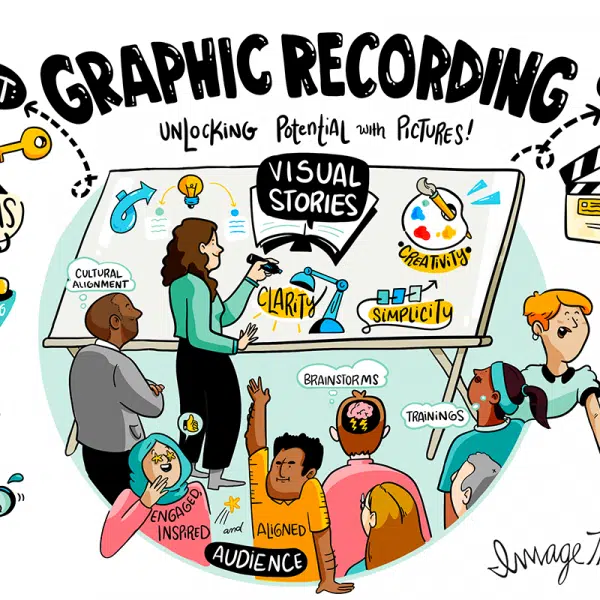
Nonprofit visual storytelling strategies range from live graphic recording at fundraising galas to illustrated annual reports, social media graphics, and donor impact videos. Each format serves the same purpose: to transform abstract mission statements into vivid, felt experiences. That transformation is where donor engagement storytelling begins to do its real work.
Why Nonprofits Use Visual Storytelling to Inspire Donors
The research is clear. Most people are visual learners. We process images faster than text, retain them longer, and are far more likely to share them. For nonprofits competing for attention in a crowded digital landscape, this is not a small advantage—it is the difference between a campaign that sparks action and one that disappears into the noise. Storytelling in nonprofit marketing works because it engages the whole brain, creating both intellectual understanding and emotional resonance.
But the deeper reason nonprofit storytelling strategies succeed is more human than neurological. Donors do not give to causes. They give to people. Visuals close the distance between a donor in a conference room in New York and a student in a classroom they helped fund. They make the invisible visible. And when donors can see the change their contribution makes, they stop calculating and start committing.
How Nonprofits Use Visual Storytelling Across Channels
Understanding how nonprofits use visual storytelling means recognizing that it is not a single format—it is a content ecosystem. Annual reports become illustrated narratives with donor impact stories woven between data points. Social media campaigns use before-and-after visuals to dramatize transformation. Events feature live graphic recording that captures the energy of a mission in real time, creating shareable assets that extend the conversation long after the room empties. Email campaigns use simple, striking visuals to anchor complex statistics in human terms.
Each channel asks for a slightly different visual language. Nonprofit content strategy at its best maps the right visual tool to the right moment in the donor journey—awareness, consideration, commitment, retention—creating a coherent story that deepens over time. The organizations doing this well are not just communicating. They are building a visual identity around their mission that donors recognize, trust, and want to be part of.
Ready to Inspire More Donor Action?
Turning Data Into Stories Donors Can Understand
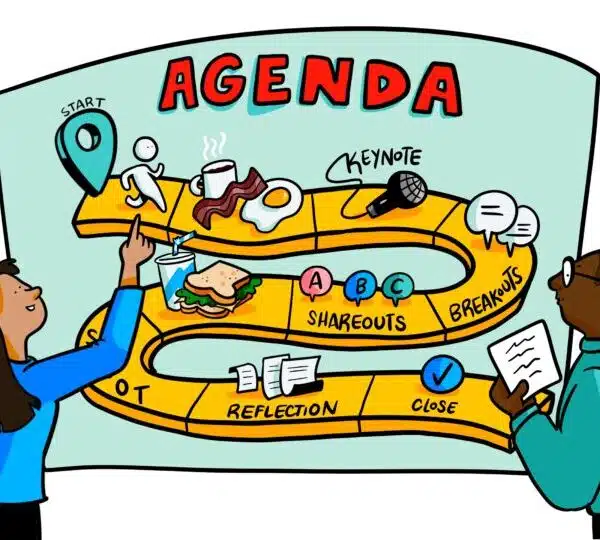
Numbers do not move people. Stories do. One of the most important roles of visual communication for nonprofits is turning program data into human narratives. A statistic like “12,000 meals served” becomes something entirely different when illustrated as a journey map of a single family from food insecurity to stability—with numbers anchored at each stage to show scale without losing humanity.
This is a discipline ImageThink has refined across thousands of client sessions in the nonprofit sector and beyond. We call it distilling complexity into clarity. When a nonprofit can hand a major donor a visual that shows—at a glance—exactly how the organization moves from problem to solution, the conversation about giving becomes a conversation about partnership. The data is still there. But now it has a face, a direction, and a purpose.
Visual Storytelling for Fundraising Campaigns
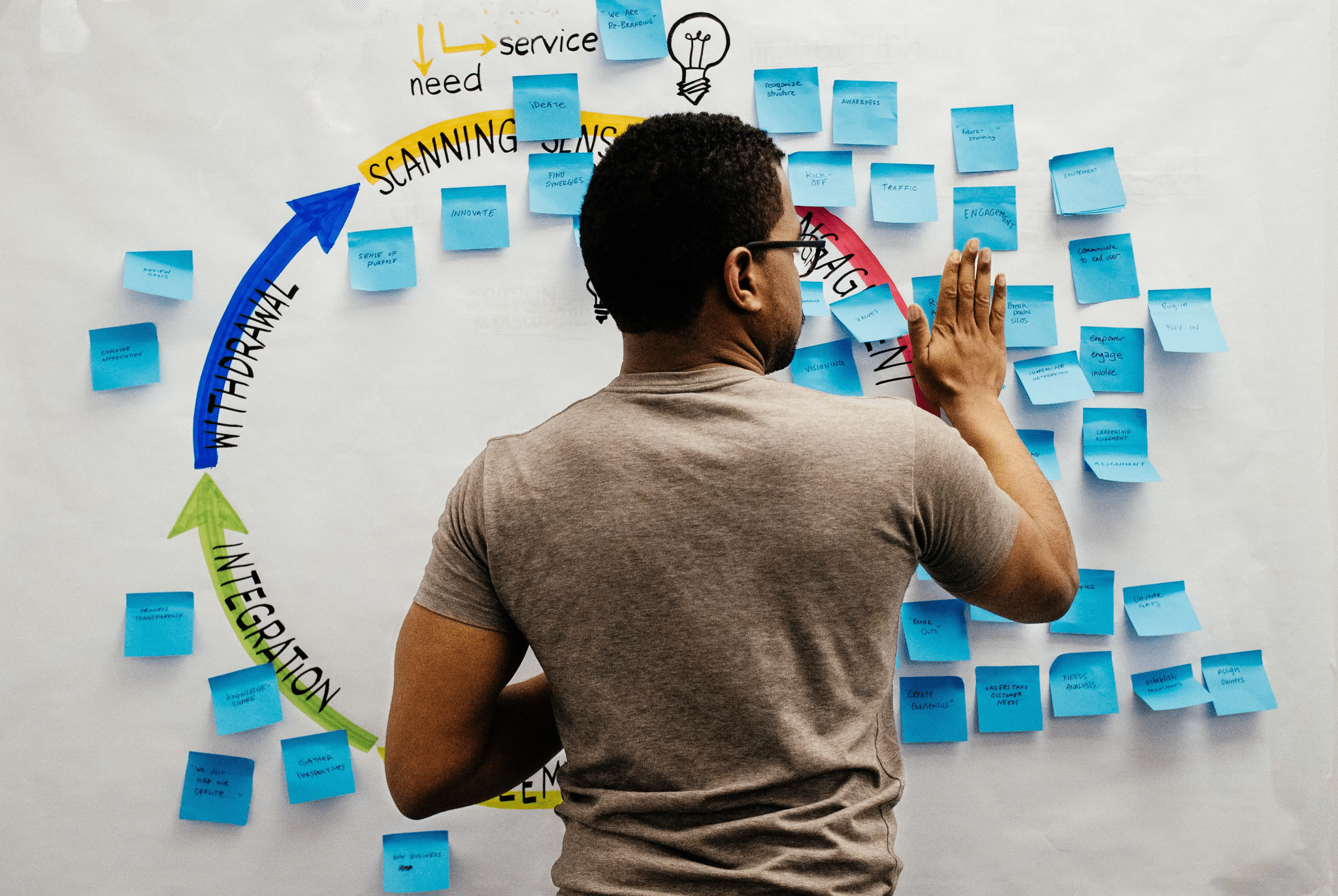
The most effective visual storytelling for nonprofits does not happen in isolation—it is built into the architecture of a campaign from the start. Before a single image is created, the best campaigns define a central visual metaphor: a journey, a ripple, a ladder, a before-and-after. That metaphor becomes the throughline that connects a gala invitation to a follow-up social post to a year-end report. Donor engagement storytelling gains enormous power when the visuals are consistent, cumulative, and emotionally coherent.
Consider the difference between a fundraising email with a stock photo and a paragraph of program statistics—and one that opens with a hand-illustrated portrait of a program participant with a two-line caption that distills their story. The second takes more intention. It also converts at a dramatically higher rate. This is how to engage a large audience during a campaign: not by giving them more information, but by giving them a story they can feel and share.
The Role of Graphic Recording in Nonprofit Events
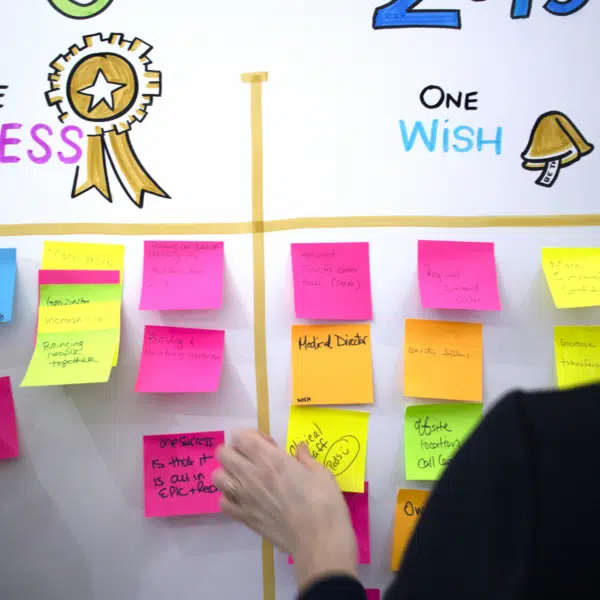
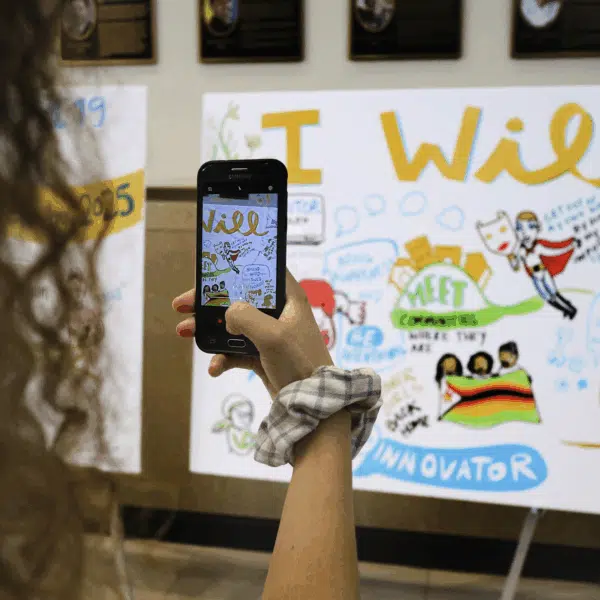
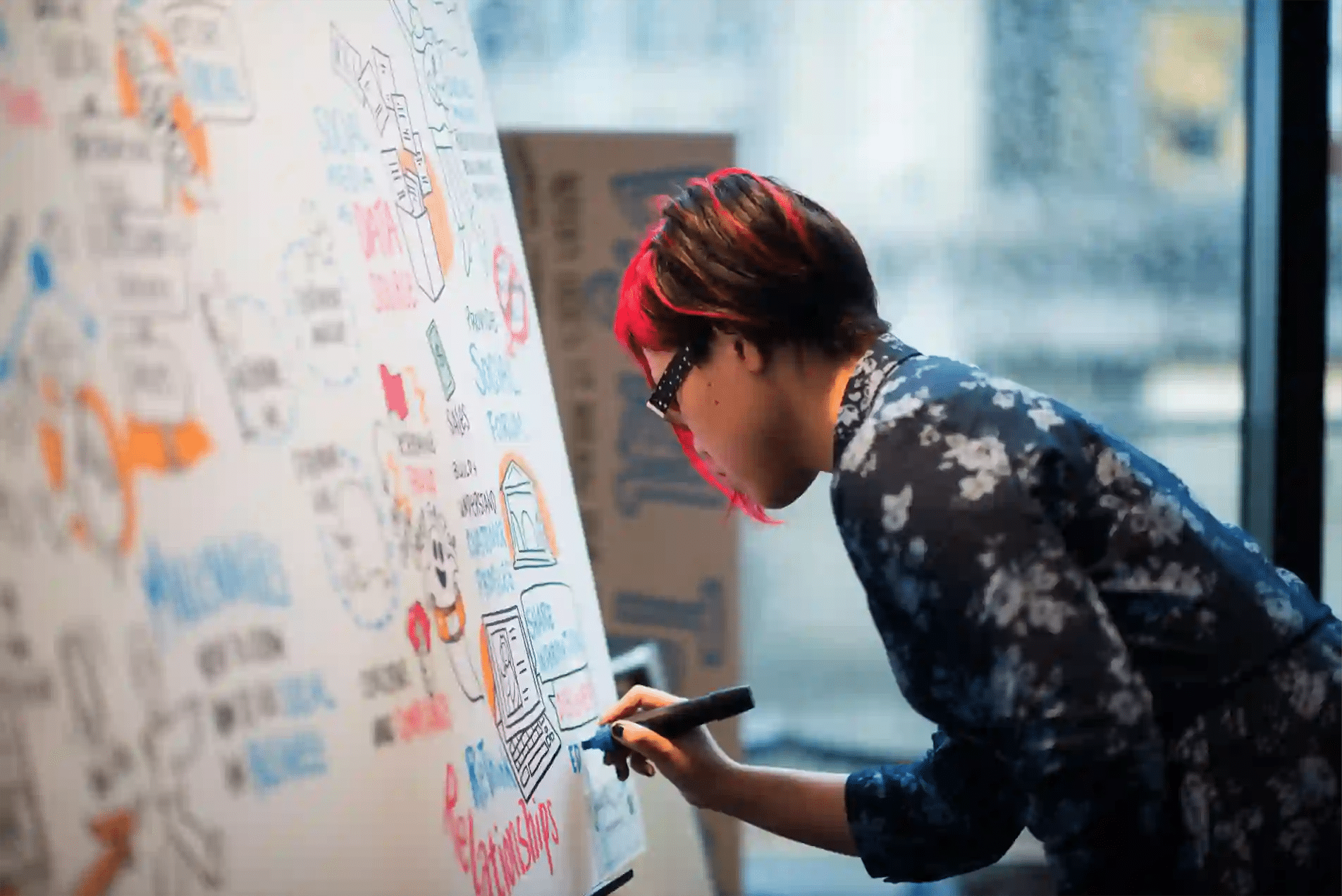
Live events are one of the highest-stakes moments in nonprofit donor engagement—and one of the most underutilized opportunities for visual storytelling. Graphic recording, the practice of capturing ideas, themes, and narratives in real time through hand-drawn visuals, transforms a gala, summit, or community forum into a living document of shared purpose. Donors and stakeholders see their ideas and stories reflected back to them on large-scale murals or illustrated summaries that capture the energy of the room.
ImageThink has provided graphic recording for nonprofit events across the country—from education and health advocacy summits to global development forums. The result is not just a memorable event moment. It is a high-value visual asset: photographed, shared on social media, printed for donor stewardship packages, and used in annual reports. One event generates months of storytelling content. That is how nonprofits use visual storytelling to extend their reach and deepen donor relationships well beyond a single evening.
Start Telling the Story Your Mission Deserves
For nonprofit donor engagement, trust is not optional—it is the whole game. Donors want to know their investment is being used wisely, that the organization is accountable, and that the impact is real. Visual communication for nonprofits builds that trust directly: an illustrated impact report, a journey map showing how funds flow from donation to outcome, a transparent infographic breaking down operational costs—these signal that the organization has nothing to hide and everything to show.
The most compelling nonprofit stories are already there—in the work you do every day, in the communities you serve, in the transformation you make possible. The question is whether you are capturing and communicating those stories in ways that move donors from passive awareness to active commitment. ImageThink has helped organizations across sectors—including nonprofits working in health, education, and community development—use graphic recording, illustrated storytelling, and visual facilitation to picture their biggest ideas and inspire the audiences who can help bring them to life. If your mission is powerful, your story should look like it.
Ready to Picture Your Big Idea?
"*" indicates required fields