Picture this: You’re leading a high-stakes strategy session. You want your team’s ideas to spark, connect, and stick—not disappear into the ether like yesterday’s Zoom call. You know visuals will help, but which approach will truly unlock your group’s potential? At ImageThink, we’ve spent over 16 years guiding Fortune 500s, educators, and innovators through this very decision. Here’s what we’ve learned about choosing the right visual format—and why it matters more than you think.
Why Choosing the Right Visual Format Matters for Visual Communication
The visuals you choose aren’t just decoration. They’re a catalyst for engagement, memory, and action. We’ve seen firsthand how the right visual approach can turn passive listeners into active collaborators—and transform even the most complex topics into shared understanding.
What Is Graphic Recording?
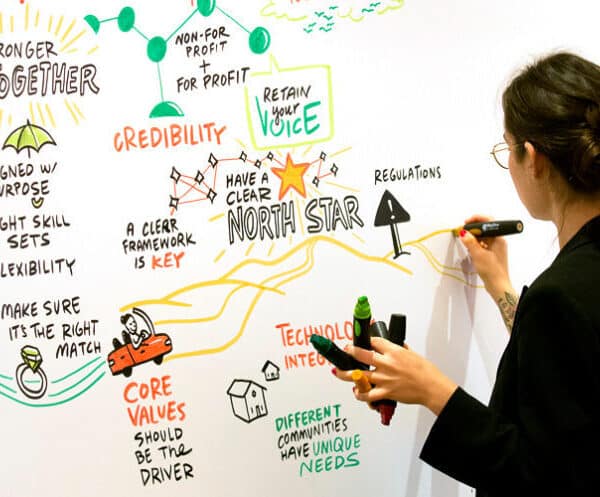
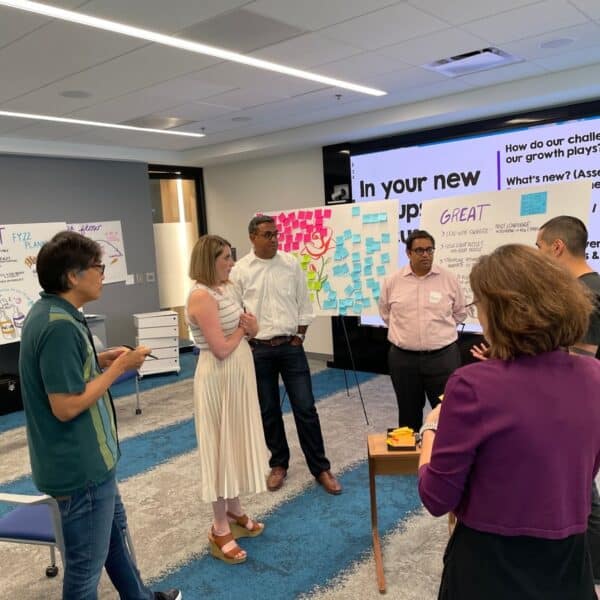
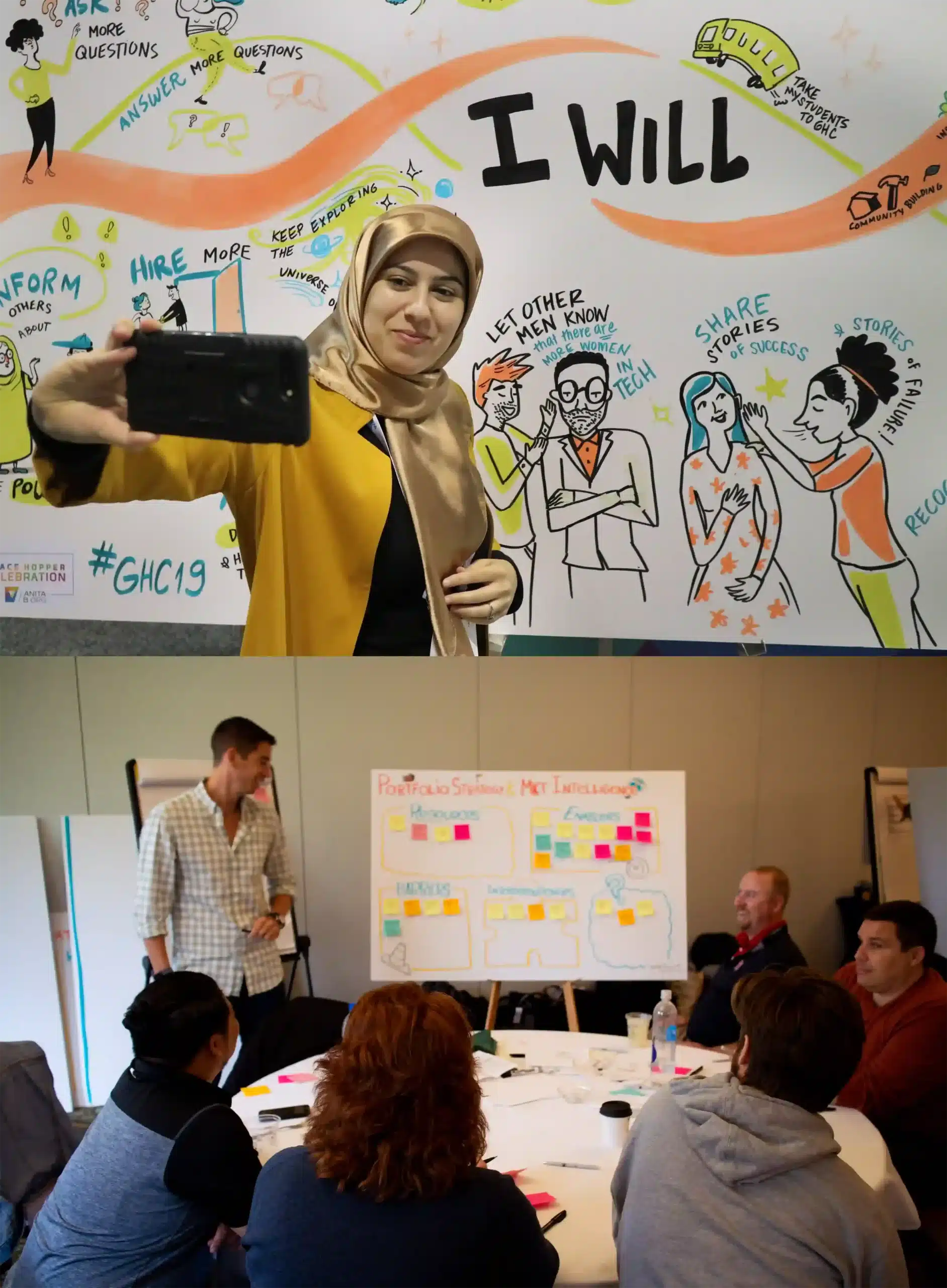
Imagine a wall-sized visual unfolding in real time as your meeting progresses. That’s graphic recording: a live, in-the-moment synthesis of key ideas, quotes, and themes, captured by a skilled visual facilitator. It brings energy to the room, makes thinking visible, and creates a lasting artifact your team will reference long after the event.
What Is Strategic Illustration at ImageThink?
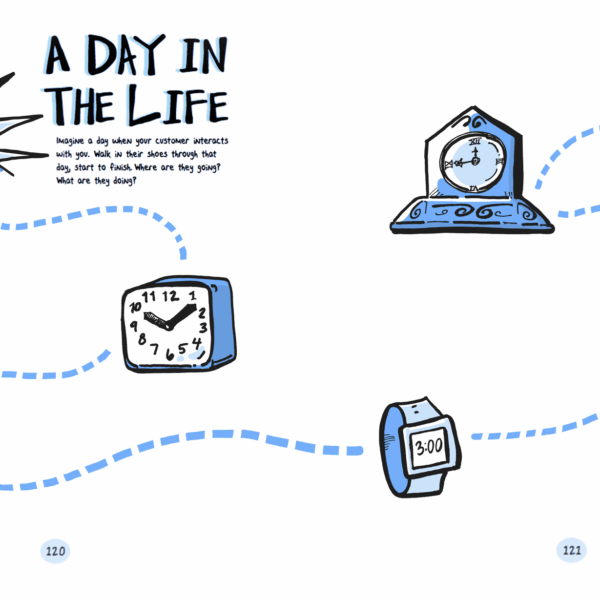
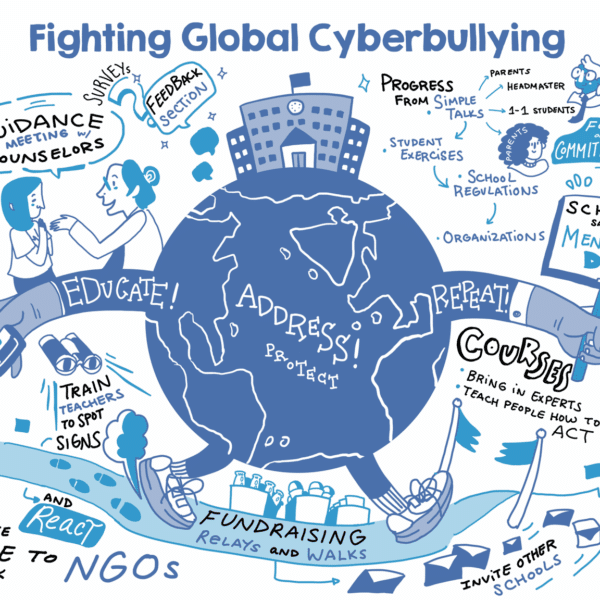
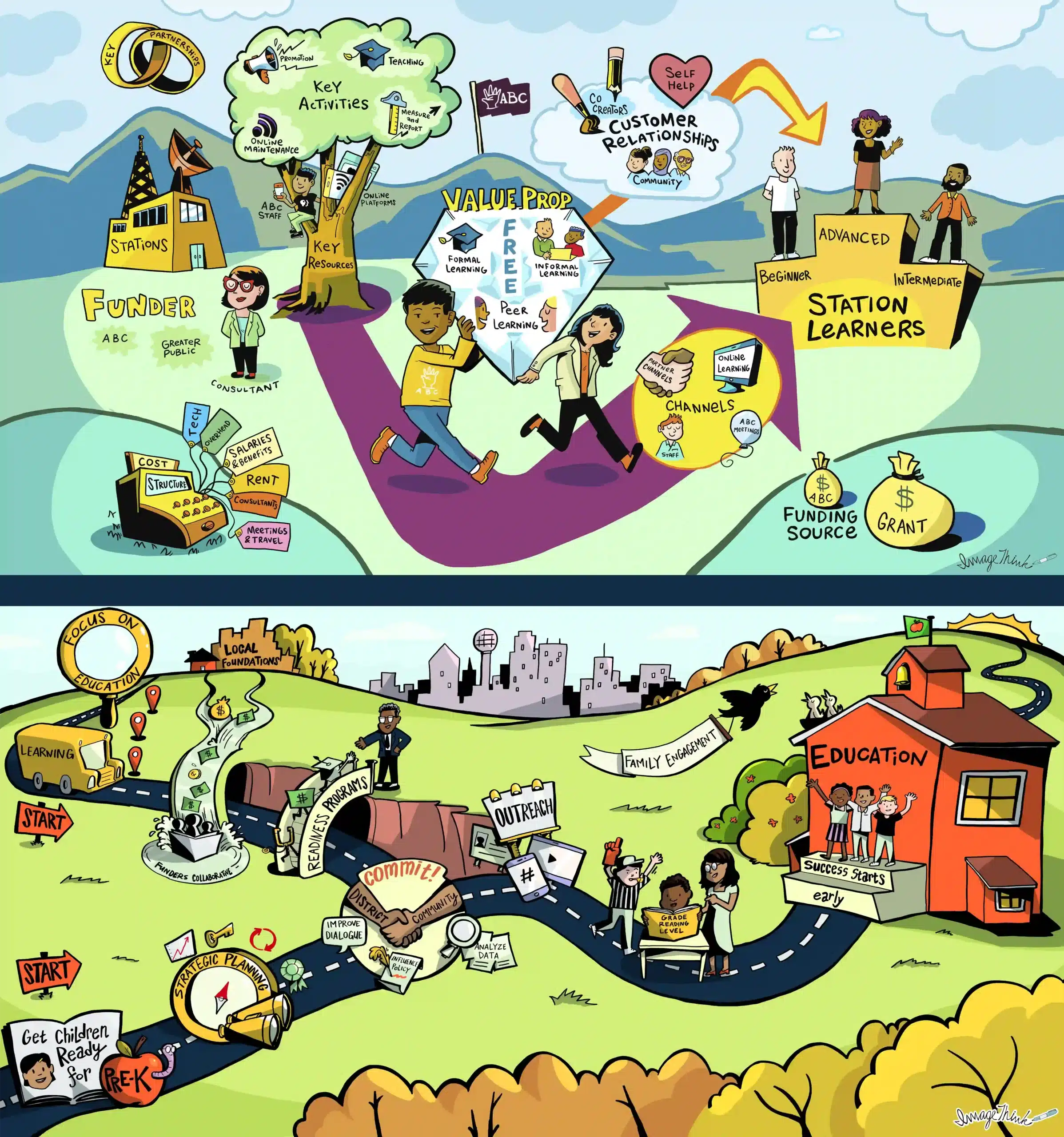
At ImageThink, illustration is more than just drawing—it’s a strategic service designed to clarify, distill, and amplify your message. Our strategic illustration process is fully iterative, meaning we partner with you from concept to final visual, ensuring every detail aligns with your goals and brand. Whether you need a patient journey map, a visual of your company’s core values, or a process map that simplifies complexity, our team crafts custom visuals that drive understanding and inspire action.
Recently, a global healthcare client approached us struggling to communicate a complex patient journey to both their internal teams and external partners. Through our strategic illustration process, we collaborated closely to distill their intricate processes into a single, clear visual map. The result? Their teams aligned faster, their message landed with clarity, and the visual became a go-to reference across the organization—proving that the right strategic illustration doesn’t just explain, it unites and inspires action.
Unlike graphic recording, our illustrations are usually created before or after your event, allowing time for research, feedback, and refinement. The result? Polished, on-brand visuals that elevate presentations, marketing, and internal communications—and become assets you can use long after the session ends.
What Are Slide Presentations Best For?
Slide presentations are the old reliable: structured, sequenced visuals that guide your audience through information step by step. They’re excellent for sharing data, outlining processes, and delivering key messages in a controlled, linear format. But slides alone can sometimes fall flat—especially when engagement is your goal.
It’s important to note: slide presentations are not a good fit for collaborative meetings. Because slides are fixed, they subtly signal that the ideas presented are also fixed—leaving little room for spontaneous input or co-creation. In our experience, when you want to spark fresh thinking, slides can unintentionally shut down the very creativity you’re hoping to ignite.
| Feature/Goal | Graphic Recording | Illustration | Slide Presentations |
| Format | Live, real-time visuals | Custom, polished visuals | Structured, sequenced |
| Best For | Collaboration, engagement | Storytelling, branding | Data, process, messaging |
| Interactivity | High | Low/Medium | Low |
| Flexibility | Very flexible | Flexible (pre/post event) | Fixed |
| Production Timeline | Real-time | Pre/post event | Pre-event |
| Cost | Higher | Medium | Lower |
| Ideal Use Case | Workshops, strategy, brainstorming | Change management, marketing | Reports, lectures, static info |
Graphic Recording vs Illustration: Key Differences
Here’s where experience matters. Graphic recording thrives in live, collaborative environments—capturing the energy and flow of conversation. Illustration, on the other hand, gives you polished, on-brand visuals that support storytelling and reinforce your message. We often recommend graphic recording for workshops and brainstorming, and illustration for pre/post-event materials or marketing.
Graphic Recording vs Slides: Engagement and Flexibility
The difference? Graphic recording is spontaneous and interactive, drawing participants in as ideas emerge. Slide presentations are pre-planned and presenter-driven—great for clarity, but less dynamic. When you want to foster participation, graphic recording is your ally. When you need structure, slides shine. But for collaborative sessions, stick with formats that invite contribution—not just consumption.
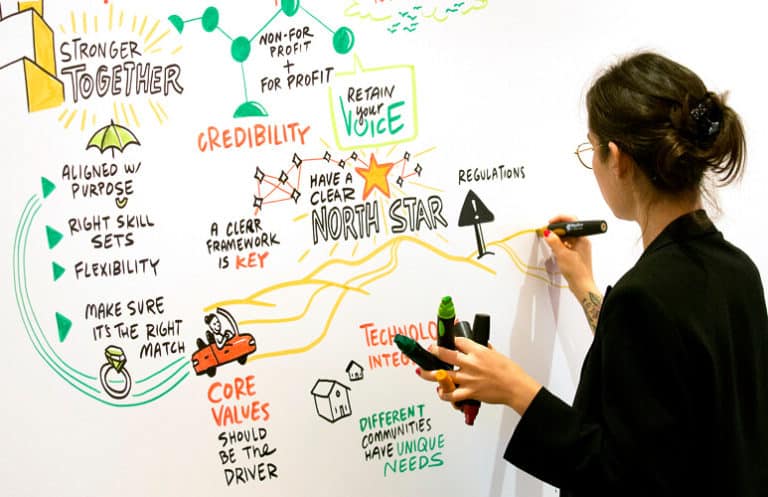
Illustration vs Slides: Storytelling and Visual Impact
Illustrations add personality, warmth, and context—turning abstract concepts into memorable visuals. Slides organize information, but can lack the emotional resonance of custom artwork. For the most impact, we often blend illustrations into slide decks for a presentation that’s both clear and compelling.
How to Choose the Right Visual Approach for Your Event
After hundreds of events, our advice is simple: Start with your goals. Do you want to drive engagement, explain complexity, or persuade? Consider your audience—are they hands-on, or do they prefer a guided journey? And think about outcomes—do you need live synthesis, or polished visuals as takeaways?
Choose the right visual format with confidence.
Hybrid Approaches: Combining Graphic Recording, Illustration, and Slides
Some of our most successful clients mix and match: graphic recording live, then refining the best moments as illustrations for follow-up slides, reports, or social posts. The magic is in the combination.
Cost, Timeline, and Production Considerations for Visual Communication
- Graphic recording: Invests in live expertise and planning, but delivers unique value and engagement.
- Illustration: Custom, polished, and tailored; requires lead time for best results.
- Slides: Quick to produce, budget-friendly, but less interactive.
Common Mistakes When Choosing Visual Formats
- Letting style trump substance
- Overlooking the power of live engagement
- Defaulting to slides for every situation—especially for workshops or innovation sessions
FAQ: Graphic Recording vs Illustration vs Slides
What is the difference between graphic recording and illustration?
Graphic recording happens live and captures group dynamics; illustration is crafted before or after, focusing on storytelling and branding.
When should I use graphic recording vs slides?
Choose graphic recording for collaborative, idea-generating sessions; use slides for structured, informational presentations.
Are illustrations better than slide presentations?
Illustrations add personality and context, while slides are best for organizing information. The best approach often combines both.
What type of visuals work best for workshops?
Graphic recording is ideal for workshops—its flexibility and interactivity drive engagement and creativity.
Can graphic recording and slides be used together?
Absolutely! Many teams use graphic recording live, then integrate the visuals into post-event slide decks for maximum impact.
The Best Choice Aligns with Goals, Audience, and Outcomes
There’s no one-size-fits-all answer. The smartest leaders start with the end in mind, then choose (or combine) the visual methods that bring their message—and their people—to life. If you’re ready to unlock your team’s potential, we’re here to help you choose wisely.
What’s your next event’s goal—and which visual approach will help you achieve it?