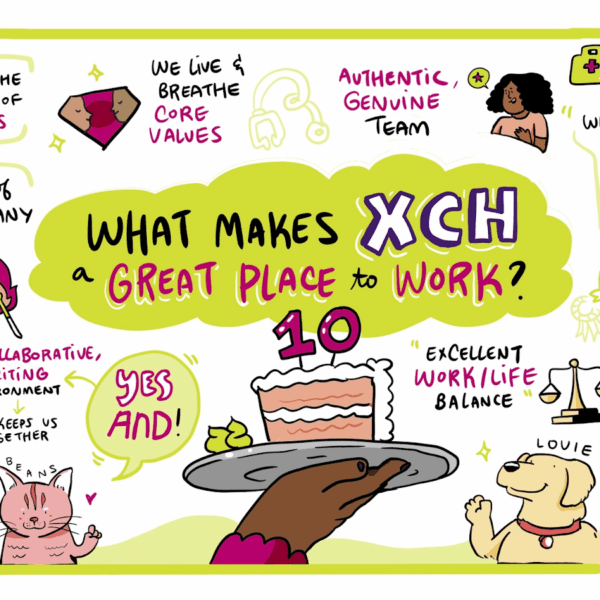
Picture this: You’ve just announced a major organizational restructure. The slides are polished. The rationale is sound. And yet, by the time people leave the room, half of them aren’t sure what just changed — or why it matters.
That’s the change management paradox. Leaders invest months in strategy, and minutes in communication. Then wonder why transformation stalls.
For nearly two decades, ImageThink has helped some of the world’s most influential organizations solve exactly this problem. Not with better slide decks. With pictures.
Here’s what we’ve learned: when people can see change, they can support it.
What Is Change Management?
Change management is the structured practice of guiding people through organizational transformation — from a current state to a desired future one. It covers strategy, communication, leadership alignment, stakeholder engagement, and the sustained effort to make new ways of working stick.
Done well, change management ensures that a company’s strategic vision doesn’t just live in a boardroom. It lives in the daily behavior of every person on the team.
Done poorly, it’s a memo that nobody reads.
Why Change Feels Abstract to Teams
Organizational change is inherently complex. It asks people to let go of familiar routines, navigate ambiguity, and trust a future they haven’t experienced yet. Most change communication makes this harder, not easier.
The culprit is usually abstraction. Leadership vision lives in frameworks, PowerPoints, and strategy documents. But the human mind doesn’t process abstraction the way it processes images.
Research shows that visual communication increases information retention by up to 65%. We process images 60,000 times faster than text. Two-thirds of people are visual learners. When ideas stay locked in text and bullet points, they stay locked — unreachable and unactionable for most of the people who need to act on them.
Transformation feels threatening when it’s invisible. It becomes possible when it’s tangible.
The Power of Pictures in Change Management
In our experience working with Fortune 500 companies, government agencies, and global nonprofits, we’ve seen one truth play out time and again: visual communication is the fastest path from organizational vision to individual understanding.
Pictures do several things that words alone cannot.
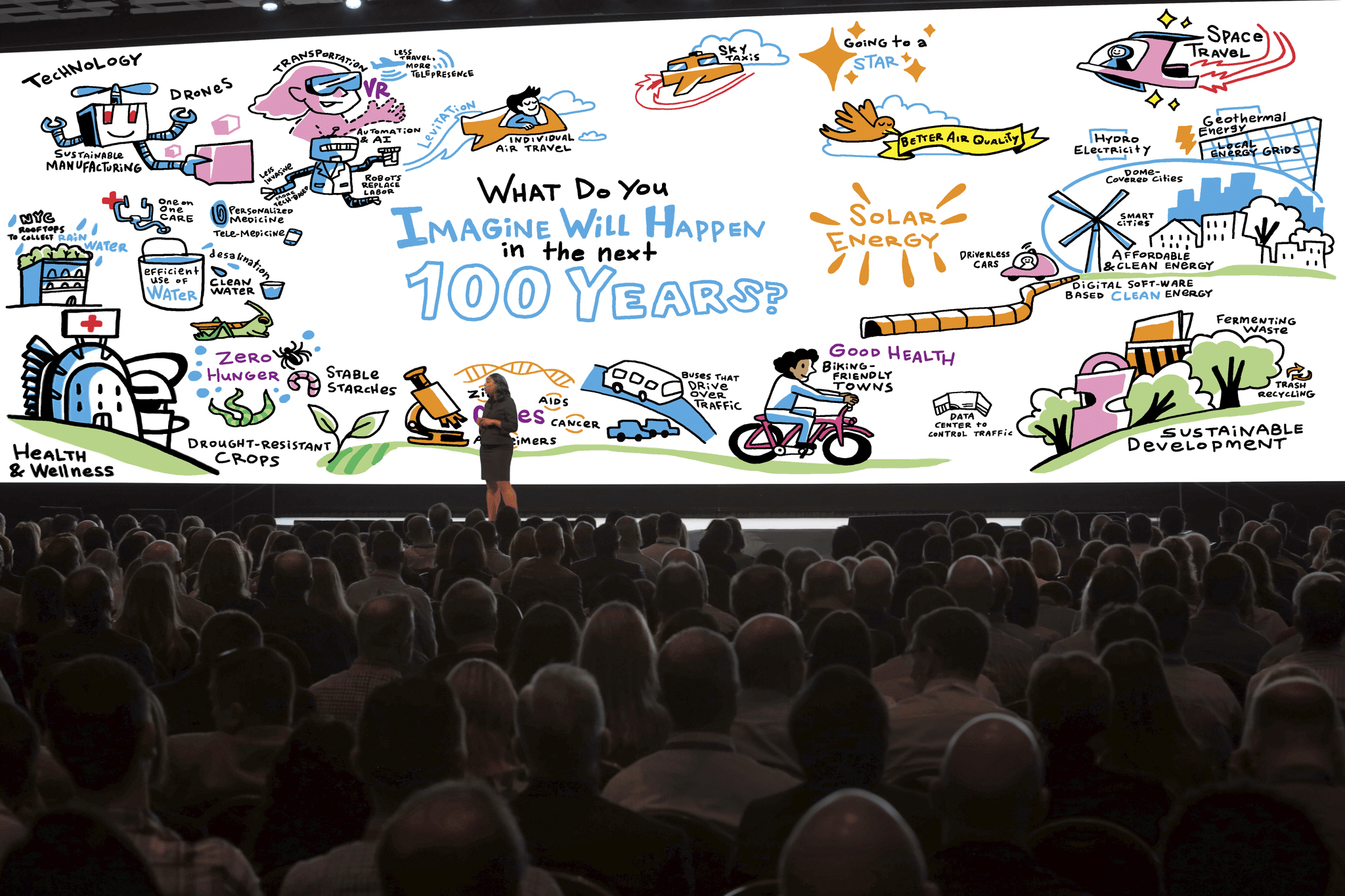
They create shared meaning. When a room of 200 people watches a graphic recorder distill a complex discussion into a single visual summary, everyone sees the same picture. That shared reference point is the foundation of alignment.
They surface disagreement early. Often, a leadership team thinks they’re aligned — until the picture reveals three people drew completely different futures. That’s not failure. That’s the whole point. Better to see the gap in the room than discover it six months into implementation.
They reduce the emotional load of uncertainty. Change is frightening in part because it’s formless. A visual roadmap gives transformation shape. And shape, paradoxically, makes ambiguity easier to tolerate.
What “Change Management Through Pictures” Means
We’re not talking about illustrations added to a slide deck as decoration. We mean visual thinking embedded throughout the change process — from diagnostic conversations to launch events to sustained communication campaigns.
ImageThink pioneered graphic recording in New York in 2009. Since then, we’ve supported thousands of sessions across technology, healthcare, pharma, education, and the nonprofit sector. What we’ve built is a practice — a discipline — for making complex ideas visible in ways that move people.
Change management through pictures means treating visual communication as a strategic tool, not an afterthought. It means listening deeply to an organization’s challenges, then translating those challenges — and the path forward — into images that resonate at every level of the company.
Visual Tools Commonly Used in Change Management
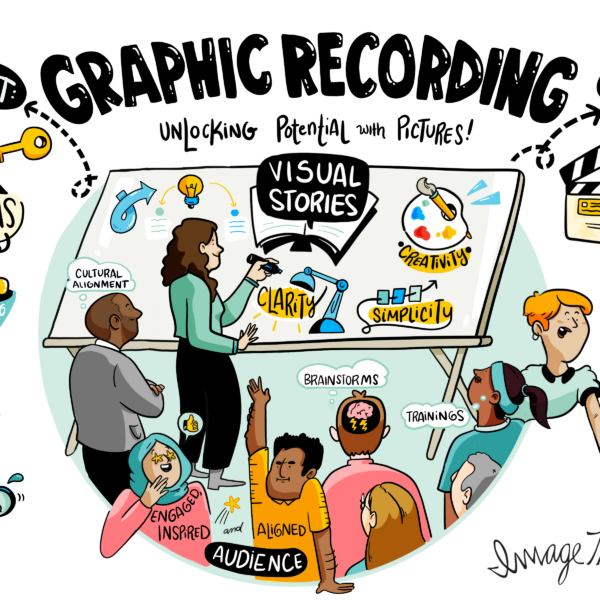
Graphic Recording
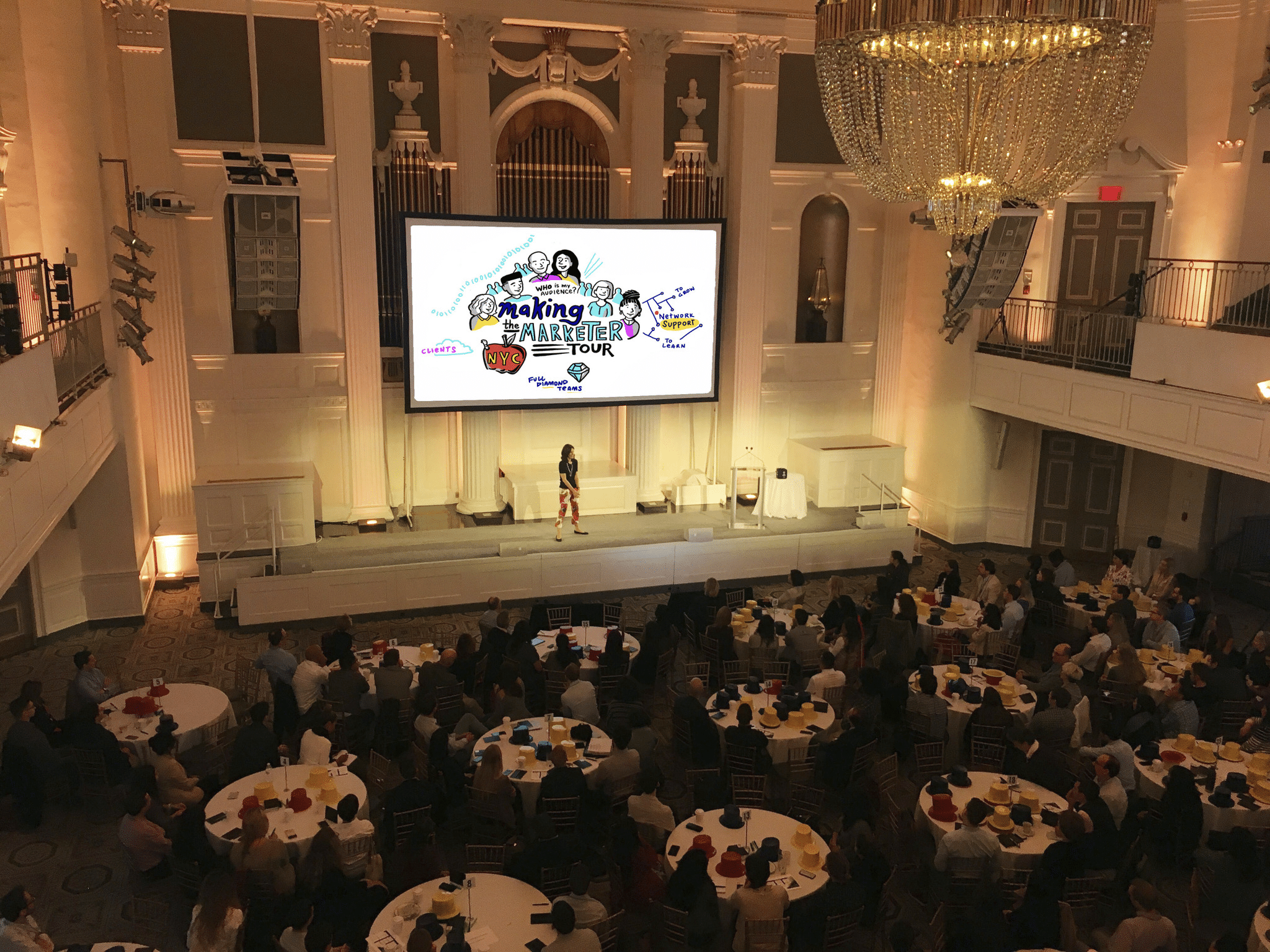
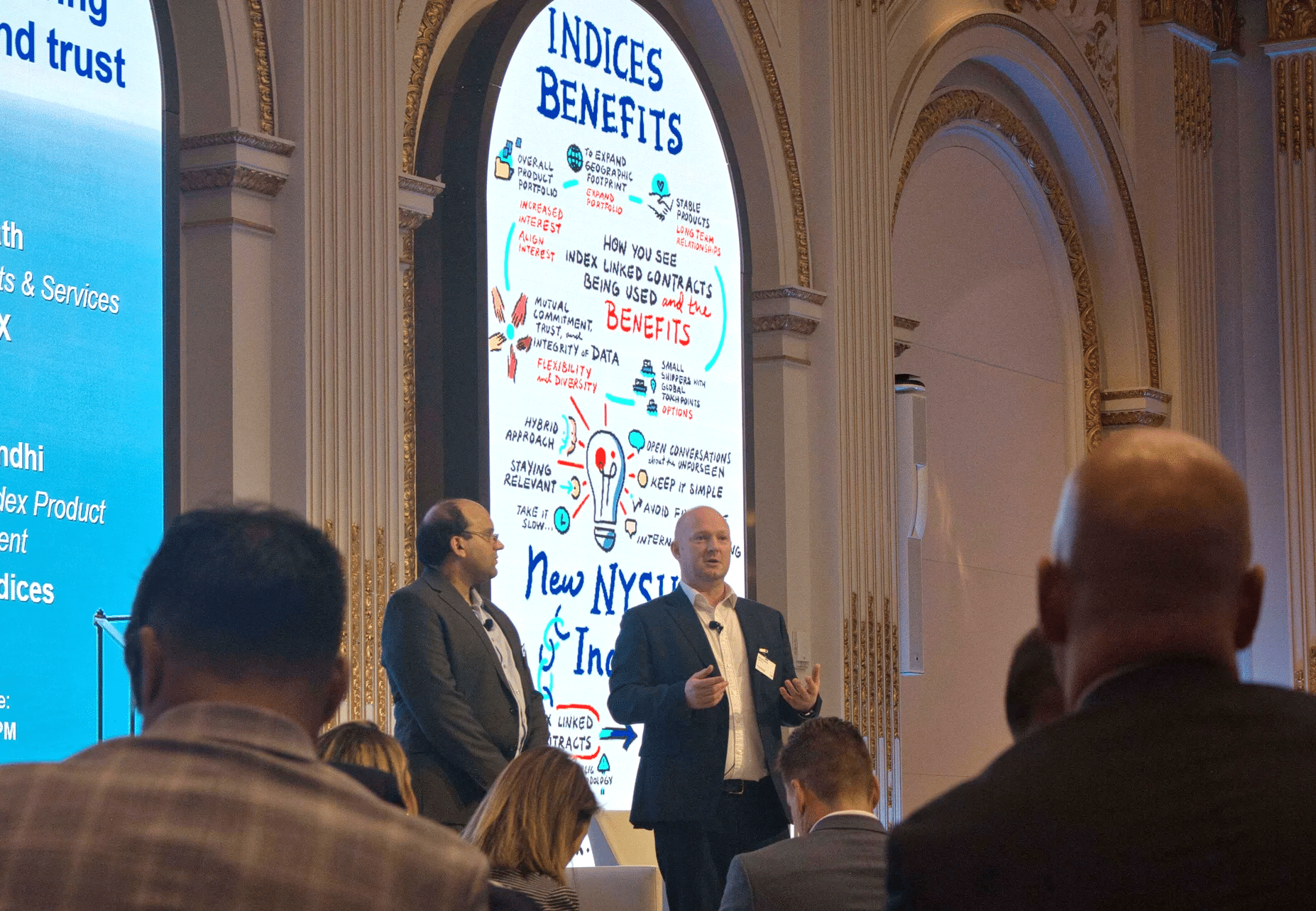
Live, real-time illustration of conversations, strategy sessions, and town halls. A graphic recorder listens to what’s being said and creates a large-scale visual summary as it unfolds. This isn’t note-taking — it’s synthesis. Leaders leave with a visual artifact that captures their most important thinking.
Visual Facilitation
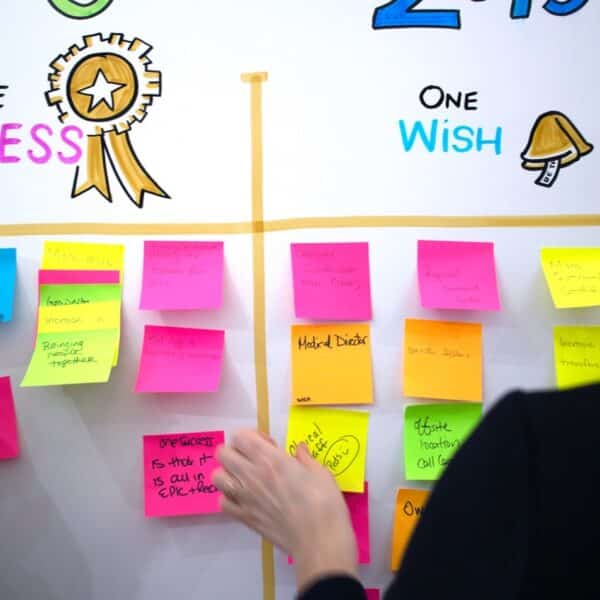
Structured workshops where visual thinking methods are built into the facilitation process itself. Participants work with visual frameworks, timelines, and mapping exercises that make their mental models visible to each other. The result: better decisions, faster.
Interactive Social Listening Murals
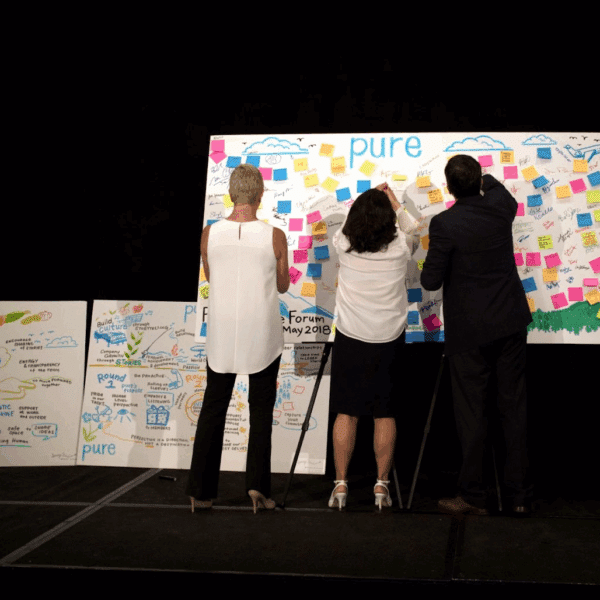
At large conferences and summits, social listening murals capture themes emerging from both the room and the broader digital conversation. We recently delivered this work at the Partnership for Healthy Cities Summit in Rio de Janeiro — combining live visual capture with social media listening to create a dynamic, real-time picture of the conversation.
Change Roadmap Visualizations
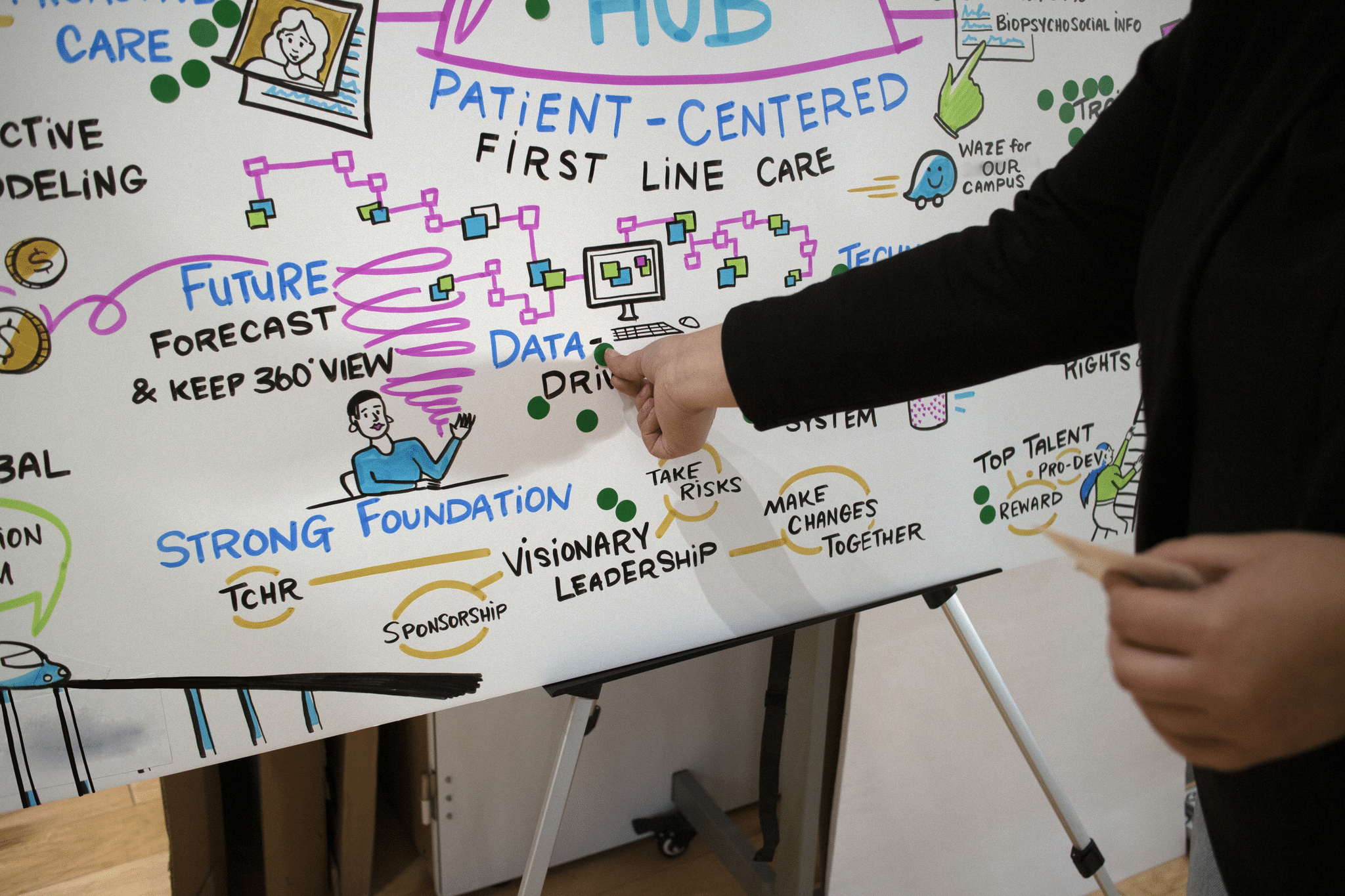
Static strategy documents become visual roadmaps: illustrated journeys from current state to future state that teams can point at, share, and return to. Instead of a 40-page PDF nobody reads, a visual roadmap becomes a living reference — pinned to walls, embedded in communications, revisited at milestones.
Visual Metaphor Development
One of the most powerful tools in organizational change is a shared metaphor. When a top pharmaceutical company needed to communicate a complex restructure to thousands of employees, we created a visual metaphor that gave the transformation a coherent story. Employees didn’t just understand the change intellectually — they felt it.
How Pictures Reduce Resistance to Change
Resistance to change is rarely irrational. It’s usually a rational response to feeling unseen, uninformed, or unheard. People resist what they don’t understand. They disengage from what feels imposed.
Visual communication addresses each of these drivers directly.
When people see their ideas captured in real-time on a large canvas — when their words become part of the picture — they feel heard. That shift in emotional experience is not cosmetic. It changes the relationship between leaders and teams. It signals: your input matters. This future is being built with you, not handed to you.
Visual summaries also give people something to hold onto during the disorientation of transition. A change roadmap isn’t just informative — it’s stabilizing. It answers the question everyone is quietly asking: where are we going, and how will we know when we get there?
Making Transformation Tangible for Leaders
Change management often fails at the top before it fails anywhere else. Leadership teams misalign in ways they don’t recognize — using the same language to describe different futures, making assumptions about shared understanding that don’t hold.
Visual facilitation surfaces this misalignment early, when it’s still solvable.
In our work with LEGO, a two-day visual facilitation workshop helped their marketing team spot an innovative theme that led to their biggest marketing idea in company history. The pictures didn’t generate the idea — but they created the conditions for it to emerge. By making every team member’s thinking visible, the workshop unlocked connections that wouldn’t have happened otherwise.
For leaders, the discipline of making strategy visual is also a discipline of precision. You can’t draw something vague. The act of turning an organizational vision into a picture forces the clarity that makes execution possible.
Making Transformation Tangible for Teams
Front-line employees experience change differently than senior leaders. They don’t see the strategy deck. They feel the ripple effects — in their workflows, their relationships, their sense of stability.
Visual communication bridges this experience gap.
When the story of change is told visually — through illustrated narratives, roadmap murals, and visual summaries distributed after key events — the transformation becomes something people can see. Not just something they were told about in an all-hands meeting.
This matters especially during large-scale transformation initiatives. When teams can track progress visually — when they can literally see where they are on the journey — adoption accelerates. Ambiguity decreases. And the emotional weight of change becomes manageable.
Turn Change Into Something People Can See
Change Management Use Cases Where Visuals Excel
Mergers and acquisitions: Visual frameworks help two cultures find common ground and build a shared future state together.
Strategy launches: Live graphic recording at all-hands events ensures leaders’ vision is captured accurately and shared immediately — no message lost in translation.
Leadership development programs: Visual facilitation methods build leaders’ capacity to think together, not just in parallel.
Digital transformation initiatives: Technology change is abstract by nature. Visual roadmaps and journey maps make the path concrete and the destination real.
Culture change: Values and behaviors are notoriously hard to communicate. Visual metaphors and illustrated frameworks make them tangible — and memorable.
Visual Facilitation in Change Management Workshops
The most powerful change management work happens in rooms where people are actively thinking together — not passively receiving information. Visual facilitation transforms those rooms.
A visually facilitated workshop uses drawing frameworks, mapping exercises, and real-time illustration to structure collective thinking. Teams don’t just discuss the future — they picture it, literally. Priorities become visible. Trade-offs become navigable. Consensus becomes possible.
As full creative partners, ImageThink’s facilitators don’t simply capture what’s said. They help structure conversations, surface patterns, and guide teams toward clarity. Our experience spans technology companies, healthcare systems, global pharma firms, and the world’s leading nonprofits. We understand the industries we serve — which means the pictures we make carry the right context, every time.
From Static Slides to Living Visual Artifacts
The difference between a PowerPoint deck and a visual artifact isn’t just aesthetic. It’s functional.
A slide deck is consumed once and filed away. A visual artifact — a graphic recording, an illustrated roadmap, a social listening mural — becomes a reference point that lives in the organization. Teams return to it. Leaders use it to onboard new members. It travels through email chains and Slack threads and conference room walls long after the event that created it.
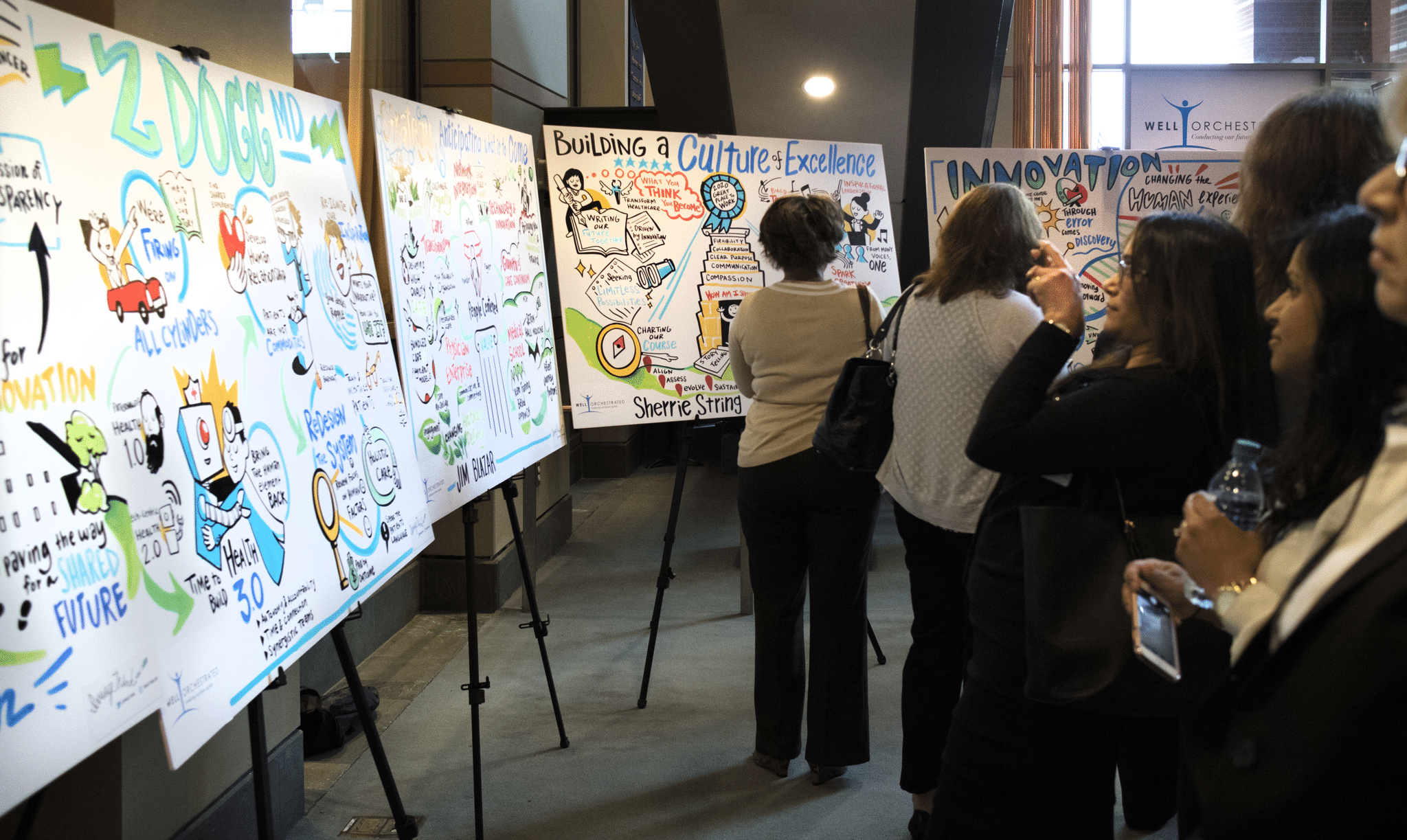
Ogilvy’s experience at SXSW illustrates this perfectly. Our graphic recordings of their keynote sessions became so iconic that they hung in Ogilvy’s offices for years after the event. That’s the staying power of visual thinking done well.
In change management, sustained visibility matters enormously. Transformation doesn’t happen in a single town hall. It unfolds over months. Visual artifacts keep the story alive.
Measuring the Impact of Visual Change Management
How do you know visual communication is working? The same way you measure any change management effort — by tracking alignment, adoption, and engagement over time.
What we hear from clients consistently: meetings get shorter because alignment comes faster. Post-event surveys show higher comprehension scores when visual summaries are used. Employees report feeling more included in transformation processes. Leaders describe better quality decisions from teams who can see the whole picture.
At an education conference, our visual summaries of personal stories from hundreds of educators generated nearly 17,000 Facebook impressions and 10,000 Twitter mentions — and produced, in the words of their social media director, a year’s worth of Instagram content in a single event. Engagement isn’t just a feeling. It’s measurable.
Common Mistakes When Using Visuals for Change
Treating visuals as decoration, not strategy. A pretty picture at the end of a slide deck doesn’t constitute visual change management. Visuals need to be embedded in the process — not added to the output.
Using visuals for announcement, not dialogue. The most powerful visual communication is participatory. When teams help build the picture, their buy-in is built alongside it.
Skipping the follow-through. A graphic recording created at a launch event has tremendous value — but only if it’s circulated, referenced, and returned to. Visual artifacts need distribution strategies, not just creation.
Assuming anyone with markers can do this work. Graphic recording and visual facilitation are professional disciplines. They require training, industry knowledge, and deep listening skills. The quality of the picture reflects the quality of the thinking it captures.
When People Can See Change, They Can Support It
Organizational transformation is hard. It asks everything of leaders and teams alike: vision, courage, patience, and the willingness to let go of what’s familiar.
The least we can do is make the journey visible.
For nearly two decades, ImageThink has helped organizations at the intersection of strategy and creativity — picturing their biggest ideas so they can build the future they’re after. We’ve visualized the thinking of world leaders, Fortune 50 executives, and nonprofit pioneers. We’ve been in the room when breakthroughs happen, and we’ve helped make those breakthroughs legible to every person in the organization.
Change management doesn’t have to feel like a fog you’re navigating without a map. With the right visual tools and the right partners, transformation becomes something you can see — clearly, together, and with confidence in what comes next.
Frequently Asked Questions
What is change management?
Change management is the structured practice of guiding people and organizations through transformation — from a current state to a desired future one. It encompasses strategy, communication, leadership alignment, and sustained effort to embed new ways of working.
Why is change management so difficult?
Change is difficult because it asks people to operate in unfamiliar territory while still doing their jobs. Most change management fails not because the strategy is wrong, but because the communication is too abstract, too infrequent, or too one-directional. People resist what they don’t understand and what they don’t feel part of building.
How do visuals help with change management?
Visuals make abstract strategy concrete. They create shared reference points across a diverse organization, surface hidden misalignments early, and reduce the anxiety of operating in uncertainty. Research consistently shows that visual communication improves information retention, accelerates comprehension, and increases the likelihood of engagement and adoption.
What tools are used in change management?
Effective change management uses a range of tools — stakeholder mapping, communication planning, training programs, and leadership coaching. When visual thinking is integrated, these tools include graphic recording, visual facilitation, illustrated roadmaps, change journey maps, and social listening murals. ImageThink specializes in combining strategic facilitation with live visual capture to make these tools as powerful as possible.
How do leaders communicate change effectively?
The most effective leaders communicate change through consistent, multi-channel storytelling — not single announcements. They engage their teams in dialogue, not just information transfer. And increasingly, they use visual communication to make the transformation story visible, accessible, and emotionally resonant. When a leader can point to a picture and say ‘this is where we’re going and why it matters,’ they move people in a way that no PowerPoint slide can.